Dining Room Storage Ideas
A practical step-by-step guide to dining room storage ideas, including preparation, instructions, common issues, tips, and next steps.
Dining Room Storage Ideas
This guide explains how to approach dining room storage ideas, including the preparation, practical steps, common mistakes, and final checks that help you finish with confidence.
Before You Start
Step-by-Step Instructions
Quick Reference
Common Problems When You Plan Dining Room Storage
Even with careful planning, you might encounter a few hurdles when implementing your dining room storage ideas. Knowing these common issues and their solutions can save you time and frustration.
1. Not Enough Space for New Furniture
Problem: You've identified ideal storage units, but your dining room feels too small to accommodate them without feeling cramped.
Solution: Re-evaluate your space. Can you utilise vertical space more effectively with tall, narrow cabinets or wall-mounted shelving? Look for multi-functional furniture, such as a dining bench with hidden storage or a console table that can double as a serving station. Slim-profile furniture can also make a big difference in tight spaces. Consider if any existing furniture can be replaced by a more space-efficient storage solution.
2. Clutter Quickly Returns
Problem: You've decluttered and organised, but within weeks, the dining room looks messy again.
Solution: This often happens when items don't have a clear, designated "home." Revisit Step 6: Organise Items Within Your Storage. Ensure every item has an obvious place. Label shelves or drawers if necessary. Establish a routine for putting things away immediately after use. If certain items are repeatedly left out, ask why. Is their "home" too inconvenient? Adjust the storage location to make it more accessible.
3. Items Are Hard to Access
Problem: You've stored everything, but getting to frequently used items like everyday plates or cutlery is a struggle.
Solution: Your storage plan needs to be practical, not just tidy. Rearrange items so that those used most often are at eye-level or within easy reach. Use pull-out drawers or trays for deep cabinets. If you have high shelves, keep a sturdy step stool nearby. Consider reorganising based on frequency of use: daily items, weekly items, and special occasion items.
4. Storage Looks Messy or Unattractive
Problem: While functional, your storage solutions (especially open shelves) appear cluttered or don't match your dining room's style.
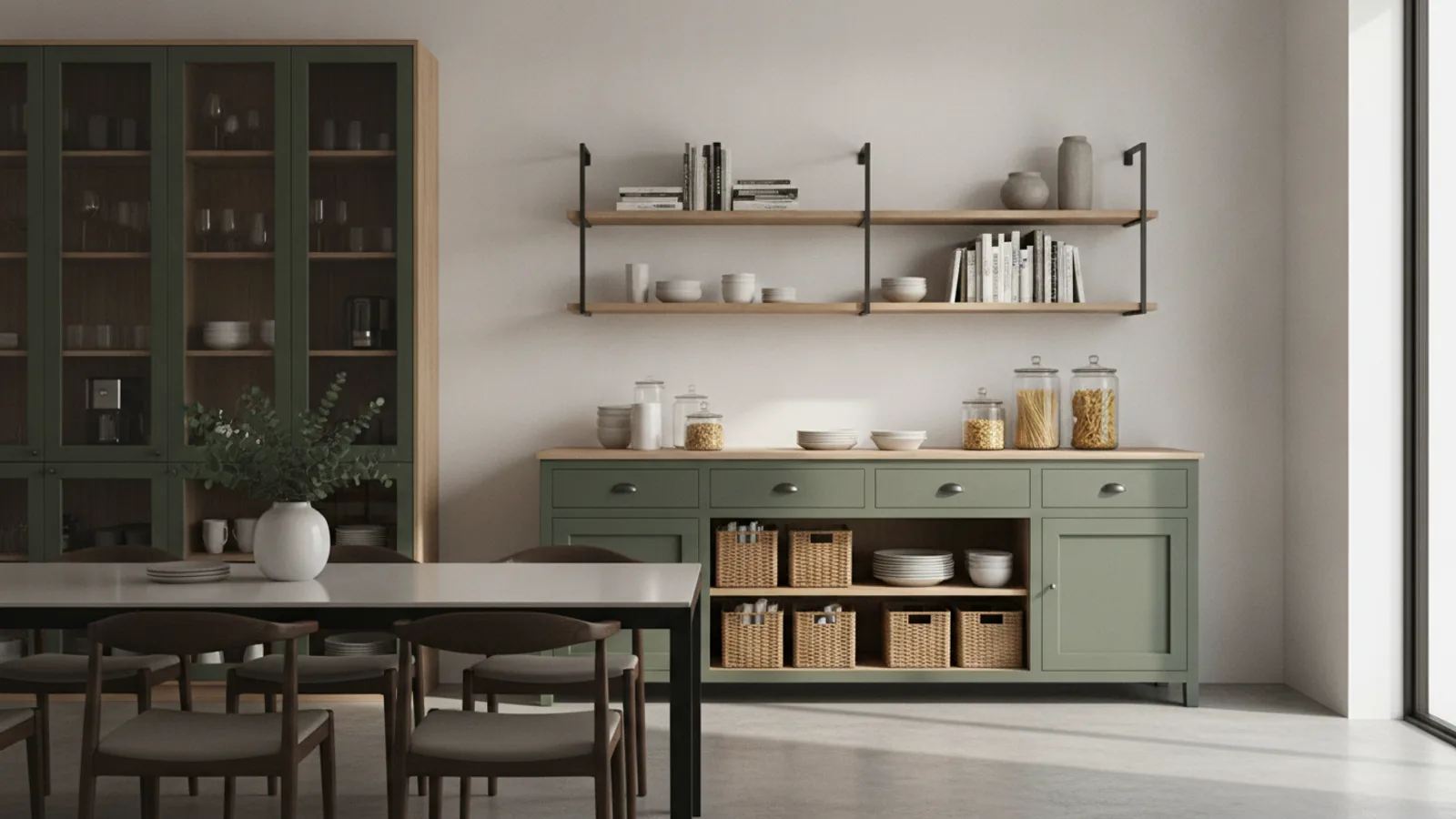
Solution: For open shelves, curate what you display. Use decorative boxes or matching baskets to hide smaller, less attractive items. Arrange displayed items in groups of three or five for a visually pleasing effect. For closed storage, ensure the furniture style complements your existing decor. If your storage unit itself is an eyesore, consider painting it, adding decorative hardware, or using decorative contact paper for a refresh. Consistency in colour palette and material can greatly improve the aesthetic.
5. Dining Room Feels Smaller After Adding Storage
Problem: You've added storage, but now the room feels closed-in or less spacious.
Solution: This can happen if storage is too bulky or blocks natural light. Opt for lighter-coloured storage units that reflect light, or pieces with glass doors or open shelving to create a sense of airiness. Avoid placing large units directly in front of windows. Utilise wall space effectively to free up floor space. Mirrors can also be strategically placed to make a room feel larger and brighter, reflecting both light and open space.
Advanced Tips for Optimising Dining Room Storage
Once you've mastered the basics of dining room storage, these advanced techniques can elevate your space's functionality and aesthetic appeal, making your dining room truly shine.
1. Custom Built-In Storage
For a truly seamless and space-maximising solution, consider custom built-in cabinetry or shelving. Built-ins can be designed to perfectly fit awkward nooks, alcoves, or entire walls, making the most of every inch. They can incorporate a mix of open display shelves, glass-front cabinets, and solid drawers, all tailored to your specific storage needs and the dimensions of your items. While a larger investment, custom built-ins add significant value and a high-end finish to your home.
2. Integrated Lighting
Enhance the appeal and functionality of your display storage with integrated lighting. LED strip lights can be installed inside glass-front cabinets or along the underside of open shelves to illuminate your prized dinnerware, glassware, or decorative pieces. This not only makes items easier to see but also creates a warm, inviting ambiance in the dining room, especially during evening meals or entertaining.
3. Multi-Functional Furniture with Hidden Depths
Beyond simple storage benches, look for dining room furniture that serves multiple purposes in clever ways. A dining table with a removable leaf might reveal hidden storage compartments underneath. A console table could transform into a bar cart. Or consider a buffet that includes a pull-out cutting board for serving. These pieces are particularly valuable in smaller homes where every item needs to earn its place.
4. Smart Use of Corners
Corners are often overlooked but can offer significant storage potential. Custom corner shelving or a dedicated corner cabinet can turn a dead space into a functional area for display or storage. Lazy Susans or rotating shelves within a corner cabinet can make items in deep corners easily accessible, preventing things from getting lost at the back.
5. Digital Inventory for Special Items
For extensive collections of special occasion china, crystal, or silver that are used infrequently, consider creating a simple digital inventory. Take photos of each set or item, note its location (e.g., "Dining Room Sideboard, Top Left Drawer"), and any special care instructions. This saves time when you need to find a specific item and helps track your valuable possessions, especially if they are stored in less accessible areas.
6. Mirror-Backed Display Cabinets
For glass-front cabinets or open shelving, adding a mirror panel to the back wall can significantly enhance the display. Mirrors reflect light, making the cabinet appear brighter and deeper, and they showcase the items from all angles. This adds a touch of elegance and helps to make the dining room feel larger and more open.
Dining Room Storage Ideas FAQ
| Q: How do I store bulky serving platters or large punch bowls? | A: Large, bulky items are best stored in deep, closed cabinets or the bottom shelves of a sideboard. Look for sideboards with adjustable shelves, allowing you to create taller compartments. Vertical plate racks can also be adapted to hold larger platters upright, making them easier to access without stacking. |
|---|---|
| Q: What's the best way to store table linens without them getting wrinkled? | A: Rolling tablecloths and runners instead of folding them can significantly reduce wrinkles and save space in drawers or on shelves. For larger items, use acid-free tissue paper between folds to prevent hard creases. Dedicated linen drawers or garment bags can also protect delicate fabrics. |
| Q: My dining room is very small. How can I add storage without making it feel cramped? | A: Focus on vertical storage like tall, narrow cabinets or wall-mounted shelves. Opt for lighter colours and reflective surfaces (like glass or mirrors) to make the room feel more open. Choose furniture with a slim profile and ensure it doesn't block pathways or natural light. Multi-functional pieces, such as benches with storage, are also excellent for small spaces. |
| Q: How can I make my open shelves look tidy, not cluttered? | A: The key is curation and balance. Only display items that are aesthetically pleasing or frequently used. Use decorative boxes or matching baskets to hide less attractive items. Arrange items in odd numbers (groups of 1, 3, or 5) and vary heights for visual interest. Leave some empty space on shelves to prevent a crowded look. Regularly dust and rearrange for freshness. |
| Q: Where should I store wine bottles and bar accessories? | A: A dedicated bar cabinet or a stylish bar cart is ideal. Many sideboards also come with integrated wine racks or can be fitted with them. For bar accessories, use drawer dividers or a dedicated section within a cabinet to keep shakers, corkscrews, and special glasses organised and easily accessible. |
Final Checklist for Dining Room Storage Ideas
Before you consider your dining room storage project complete, run through this checklist to ensure every detail has been covered and your space is truly optimised.
- Have you thoroughly decluttered? All unneeded or unused items have been removed or rehomed.
- Are all items categorised and accounted for? You know what needs to be stored and where its home is.
- Have all measurements been accurately taken? Your chosen storage units fit the space without creating obstructions.
- Are storage solutions appropriate for the items? Bulky items have deep storage, delicate items are protected, and display items are showcased.
- Is the furniture securely installed? Wall-mounted units are correctly fastened, and heavy cabinets are stable.
- Are frequently used items easily accessible? You don't have to strain or move other items to get to daily essentials.
- Are less-used items stored logically? Special occasion items are safely stored but can be retrieved when needed.
- Is the overall look tidy and cohesive? Both open and closed storage contribute to an inviting atmosphere.
- Is there a plan for ongoing maintenance? You know how to keep clutter from returning and maintain the system.
- Does the dining room flow well? There's enough space to move around comfortably, even when the table is in use.
By following these steps and checking off this list, you'll create a dining room that is not only beautiful but also highly functional, serving all your entertaining and everyday needs with ease.
FAQ
What should I check before I start?
Check the goal, the key prerequisite, and any current instructions that could change the safest next step for dining room storage ideas.
How can I tell whether the result is working?
Use the practical checks in the guide, pause if a required step is unclear, and verify the finished result against the intended outcome.