Entryway Colour Ideas
A practical step-by-step guide to entryway colour ideas, including preparation, instructions, common issues, tips, and next steps.
Entryway Colour Ideas
This guide explains how to approach entryway colour ideas, including the preparation, practical steps, common mistakes, and final checks that help you finish with confidence.
Before You Start
Step-by-Step Instructions
Quick Reference
Common Problems When You Entryway Colour Ideas
Problem: The colour looks different on the wall than on the paint chip.
Fix: This is a very common issue because small paint chips don't show how the colour reacts to your specific lighting conditions, shadows, and surrounding elements in a larger space. Always buy **tester pots** (small pots of paint) and paint large swatches (at least 30cm x 30cm) directly onto different walls in your entryway. Observe them at different times of day and night for several days before making a final decision. This will give you the most accurate representation of how the colour will truly appear in your home.
Problem: The entryway feels too dark or too small after painting.
Fix: This often happens when a dark colour is chosen for a space with limited natural light or a small footprint without proper consideration. If you've just tested the colour, consider going two or three shades lighter on the same colour strip. If it's already painted, you can lighten the effect by adding more reflective surfaces like a large mirror, lighter-coloured accessories, or upgrading to brighter artificial lighting to bounce light around. You might also consider painting only the upper half of the wall in a darker shade and the lower half in a lighter one, creating a visual break.
Problem: The new entryway colour clashes with adjacent rooms or existing decor.
Fix: Before painting, it's crucial to always consider how the entryway colour will flow into visible adjoining rooms. If you've already painted and it clashes, you have a few options. The most direct solution is to **repaint** with a more neutral shade or one that directly complements the adjacent room's palette. Alternatively, you can introduce **transitional elements** like rugs, artwork, or throw pillows that incorporate colours from both the entryway and the adjoining room to create a visual bridge and harmonise the spaces. If only one wall clashes, consider repainting just that wall in a more harmonious accent colour or a neutral.
Problem: Indecision and too many options leading to paralysis.
Fix: The vast array of paint colours can be overwhelming. Break down the decision-making process into manageable steps. Start by eliminating colours you absolutely dislike. Then, consider the practical aspects: the amount of light, the size of the space, and your existing decor. Narrow your choices down to **2-4 tester pots** at most. Remember, it's just paint; it can always be changed if you're not happy with the final result. Sometimes, having a friend or family member whose style you trust offer an objective opinion can help, but ultimately, choose the colour that you love living with every day.
Advanced Tips for Entryway Colour Ideas
Once you've mastered the basics, consider these advanced techniques to elevate your entryway's design:
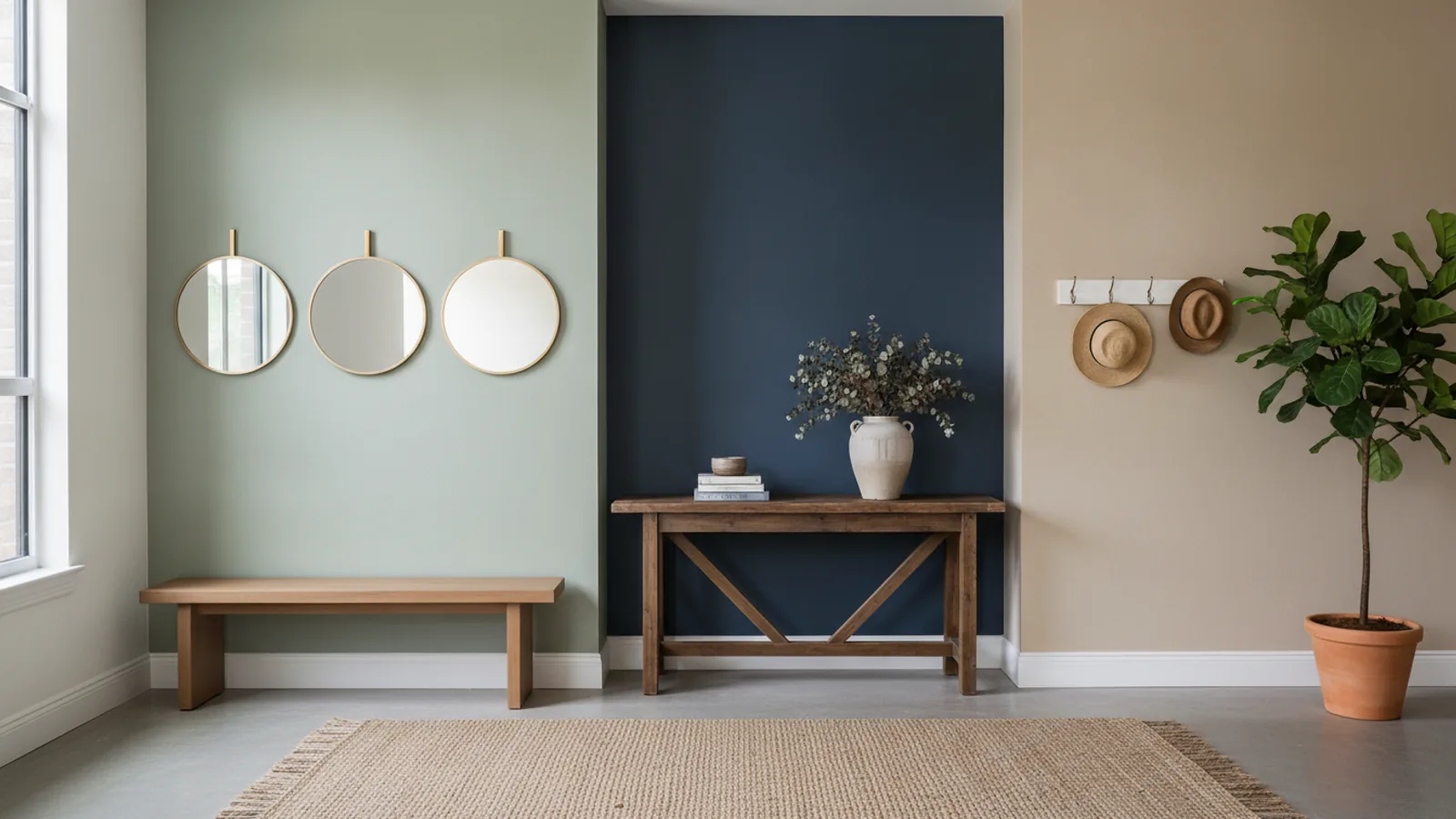
- Two-Tone Walls: Instead of a single colour, consider painting the top half of your walls one colour and the bottom half another. This can add architectural interest, make a ceiling feel higher (if the lighter colour is on top), or create a subtle dado rail effect. Use a dado rail or a clean painted line to separate the colours, ensuring precision for a polished look.
- Accent Wall or Ceiling: If you want a bold pop of colour without committing to the entire space, choose one wall – perhaps the one immediately visible upon entry – for a striking accent. Alternatively, painting the ceiling in a dark or vibrant colour can create a surprisingly sophisticated, dramatic, and intimate feel, drawing the eye upwards.
- Play with Sheen: Using different paint finishes of the same colour can create subtle interest and texture. For example, a matt finish on the walls paired with an eggshell or satin finish on the trim and doors, all in the exact same shade, creates a sophisticated, understated, and monochromatic look that speaks of thoughtful design.
- Integrate with Built-ins: If your entryway features built-in storage, shelving, or a bench, consider painting these elements in a complementary or contrasting colour to your walls. This can either make them stand out as intentional features or blend seamlessly with the walls for a minimalist, uncluttered appearance.
- Lighting as a Colour Enhancer: Invest in good quality lighting that complements your chosen colours. Warm light bulbs (around **2700-3000K**) tend to make colours appear richer and more inviting, while cooler bulbs (4000K+) can make colours seem crisper or even slightly blue. Experiment with different bulb types to see how they interact with your chosen paint colours throughout the day and evening.
- Wallpaper for Impact: Don't shy away from wallpaper, especially if you have a small entryway or want to create a grand statement. A patterned wallpaper on one or all walls can add texture, depth, and a unique personality that paint alone might not achieve, creating an unforgettable first impression.
- Use the 60-30-10 Rule: Apply this classic design principle to your entryway colour planning for a balanced look. The dominant colour covers 60% of the space (walls), a secondary colour for 30% (furniture, a large rug), and an accent colour for 10% (accessories, art, plants). This provides a visually harmonious structure.
Entryway Colour Ideas FAQ
Q: What's the best colour for a small, dark entryway?
A: For small, dark entryways, **light and bright colours** are generally recommended to reflect light and make the space feel larger and more open. Crisp whites, soft off-whites, pale greys, and light pastels (like a very light sage green or sky blue) are excellent choices. Pair them with good artificial lighting and a large mirror to maximise brightness and create a welcoming feel.
Q: Should my entryway colour match my living room colour?
A: It doesn't have to match exactly, but it should **flow harmoniously**. The entryway often serves as a transition space, so choose colours that complement or gently contrast with adjoining rooms. Neutrals are fantastic for this purpose as they can connect different colour schemes seamlessly, creating a cohesive feel throughout your home.
Q: How do I know if a colour will look good in my entryway?
A: The best and most reliable way is to **test it directly on your walls**. Purchase tester pots and paint large swatches (at least 30x30 cm) on different walls in your entryway. Observe these swatches at various times of day and night to see how the colour changes with different lighting conditions and how it looks next to your flooring and existing furniture.
Q: Can I use bold colours in my entryway?
A: Absolutely! Bold colours can make a powerful first impression and add significant personality to your home. They work especially well in **larger entryways** or as an **accent wall** in smaller spaces. If using a bold colour on all walls, ensure you balance it with lighter trim, plenty of natural light, or strategic artificial lighting to prevent the space from feeling too overwhelming or dark.
Q: What paint finish is best for an entryway?
A: For high-traffic areas like entryways, **eggshell or satin finishes** are often the most practical choice. They offer good durability, are more washable than matt paints, and have a slight sheen that adds depth without being overly reflective. Matt finishes are elegant but harder to clean, while gloss is very durable but often reserved for trim, doors, and areas you want to highlight for their shine.
Final Checklist for Entryway Colour Ideas
- Assessed entryway's size, light, and existing features?: Considered natural light, room dimensions, and fixed elements like flooring and trim to guide your choices.
- Determined desired mood and style?: Thought about the feeling you want to create (e.g., welcoming, sophisticated, cheerful) for your home's first impression.
- Explored various colour options based on light and space?: Researched how light and dark options affect the perception of size and mood in your specific entryway.
- Ensured colour harmony with adjoining rooms?: Considered the visual flow and colour connection between the entryway and visible adjacent spaces.
- Purchased and tested paint samples?: Applied large swatches to walls and observed them carefully over several days in varying light conditions.
- Selected appropriate paint finish and trim colours?: Chosen a paint finish suitable for high-traffic areas and complementary trim colours for a polished look.
- Planned for lighting and accessories?: Considered how to enhance the chosen colours and functionality with mirrors, rugs, artwork, and effective lighting.
- Made a final decision with confidence?: Feel happy and assured with your colour choice, knowing it will create a lasting positive first impression for your home.