Entryway Layout Ideas
A practical step-by-step guide to entryway layout ideas, including preparation, instructions, common issues, tips, and next steps.
Entryway Layout Ideas
This guide explains how to approach entryway layout ideas, including the preparation, practical steps, common mistakes, and final checks that help you finish with confidence.
Before You Start
Step-by-Step Instructions
Quick Reference
Common Problems When You Plan Entryway Layouts
Designing an entryway can sometimes present unexpected challenges. Knowing the common pitfalls can help you avoid them and create a truly functional space.
Problem: Overcrowding a Small Space
Description: Trying to fit too many large pieces of furniture or too much storage into a compact entryway, making it feel cramped and difficult to navigate. This is a very common issue in smaller UK homes.
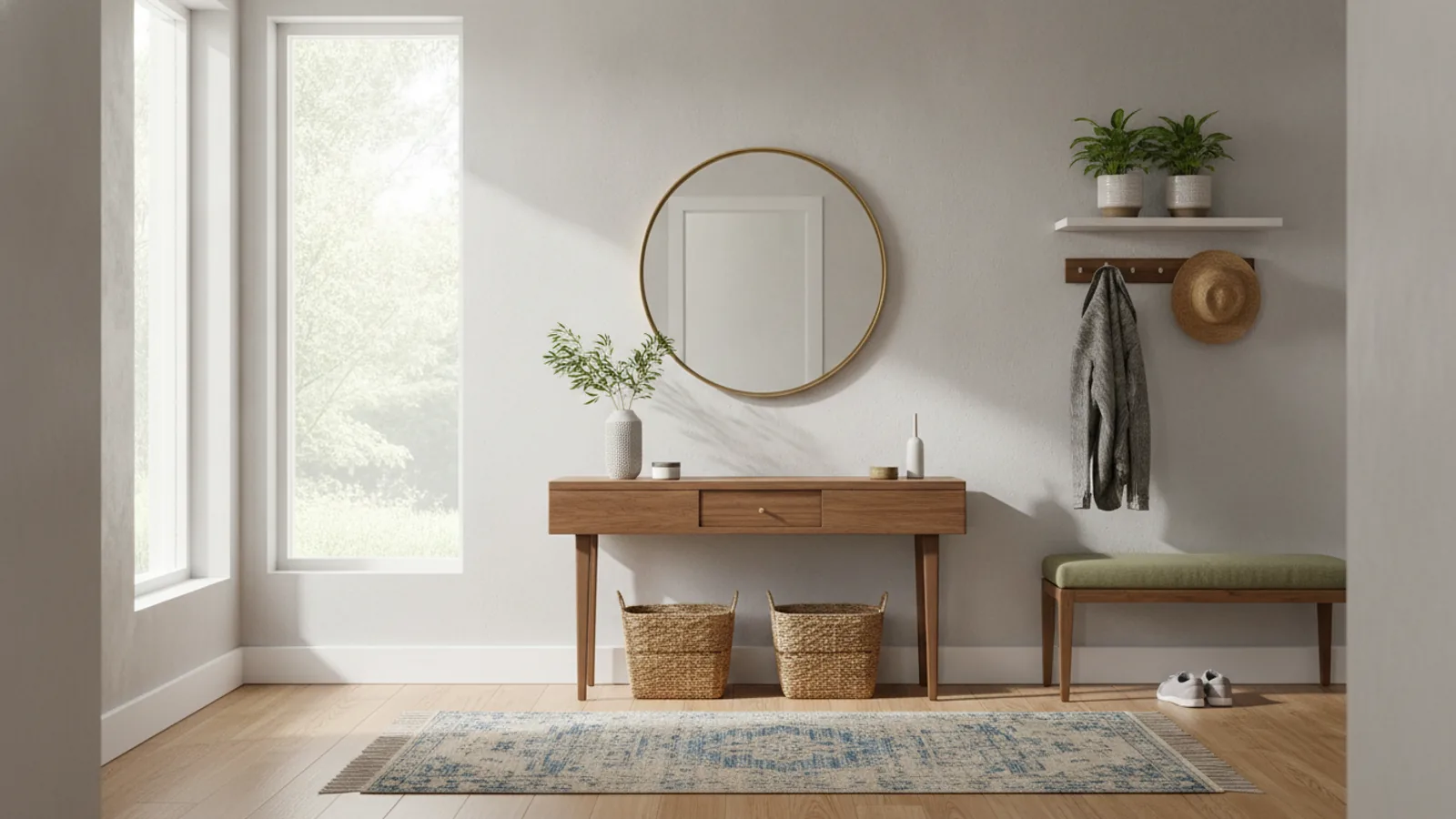
Fix: Prioritise essential items only. Opt for slim, wall-mounted, or multi-functional furniture. For instance, instead of a bulky coat tree, use wall hooks. Choose a narrow console table or a floating shelf rather than a wide one. Utilise vertical space with tall, narrow storage units if possible, or opt for simple wall shelves. A large mirror can also visually expand the space, making it feel larger than it is.
Problem: Lack of Designated Storage
Description: Your entryway lacks specific spots for keys, mail, shoes, or coats, leading to piles on the floor or surfaces, creating a perpetually messy look.
Fix: Implement clear storage solutions for every category of item. Install hooks for coats and bags, a shoe rack or cabinet for footwear, and a small dish or organiser on a console table for keys and mail. Use lidded baskets or bins for scarves, gloves, and other accessories to keep them out of sight. A dedicated space for each item helps everyone in the household know where things belong.
Problem: Poor Lighting Making the Space Dull
Description: An entryway that is too dark feels uninviting and can be impractical, especially when searching for items or getting ready to leave. Many entryways lack natural light.
Fix: Improve both ambient and task lighting. Ensure your main overhead light is bright enough. Consider adding a table lamp on a console table or wall sconces to provide softer, layered illumination. If feasible, choose lighter paint colours for the walls to reflect available light. A strategically placed mirror will also bounce light around the room, making it appear brighter and more open.
Problem: Impeded Traffic Flow
Description: Furniture or obstacles are placed in such a way that they block doorways, make it difficult to open doors fully, or create bottlenecks, making movement through the entryway awkward.
Fix: Always measure door swings and main pathways before placing any furniture. Ensure there's a clear, unobstructed path from the front door to the main living areas. If you have internal doors in the entryway, make sure they can open fully without hitting furniture. Use masking tape on the floor to visualise furniture footprints and test traffic flow before committing to a layout or purchasing items.
Problem: Entryway Feels Disconnected from the Rest of the Home
Description: Your entryway decor feels isolated or doesn't match the style and colour scheme of the adjacent rooms, creating an abrupt transition.
Fix: Integrate your entryway's design with the rest of your home. Use a consistent colour palette, materials, or a particular style element (e.g., modern, traditional, rustic) that flows from the entryway into connecting spaces. Even a small element like a rug with colours found elsewhere in your home, or a piece of art that complements nearby decor, can create a sense of cohesion and make the entryway feel like a natural extension of your living space.
Advanced Tips for Entryway Layouts
Once you've mastered the basics, consider these advanced strategies to elevate your entryway's functionality and aesthetic appeal.
Embrace Smart Home Integration
Consider adding smart lighting solutions that activate with motion sensors or are controllable via an app. This means lights can turn on automatically when you enter, or you can set schedules. Smart thermostats or security cameras can also be integrated here, giving you control and information as you come and go. A small smart display can serve as a central hub for quick checks of weather, calendar, or to-do lists before heading out.
Create a Dedicated "Command Centre"
Beyond just a key drop-off, design a compact command centre within your entryway. This might include a stylish wall-mounted organiser with sections for incoming/outgoing mail, a small calendar, a whiteboard for family messages, and a charging station for phones or tablets. This centralises essential communication and organisation, reducing clutter elsewhere in the home.
Seasonal Layout Adjustments
Think about how your entryway needs change throughout the year. In winter, you might need more space for bulky coats, scarves, and boots. In summer, you might prioritise sunglasses, hats, and lighter jackets. Consider having modular storage or easily reconfigurable elements that can be adapted. For example, a bench that allows for open storage in summer (for beach bags) but can be fitted with lidded bins in winter (for gloves and hats).
Consider Bespoke or Built-In Solutions
For a truly seamless and space-optimising entryway, especially in awkward or small areas, consider bespoke furniture or built-in storage. Custom-made benches, cabinetry, or wall units can fit perfectly into alcoves or along walls, maximising every inch of available space. While a larger investment, this can dramatically improve functionality and create a high-end, integrated look.
Incorporate Zoned Living in Open-Plan Spaces
If your entryway directly opens into an open-plan living area, use clever design to visually define the entryway zone without building walls. This can be achieved with a distinct area rug, a console table acting as a subtle divider, a strategically placed tall plant, or even different flooring materials (e.g., hardwearing tiles in the entryway transitioning to wood in the living area). This creates a sense of arrival and separation, even in an open concept home.
Maximise Vertical Storage with Picture Ledges and Hooks
Beyond standard wall hooks, consider narrow picture ledges installed high on the wall for displaying small art, plants, or even holding lightweight storage boxes. Combine this with hooks at various heights – higher for adult coats, lower for children's items or dog leads. This layers storage and decor without encroaching on valuable floor space, making the most of often-unused wall real estate.
Entryway Layout Ideas FAQ
How can I make a small entryway look bigger?
To make a small entryway feel more spacious, use light paint colours on walls and ceilings to reflect light. Incorporate a large mirror, ideally positioned to reflect a window or light source, as this visually expands the area. Choose slim, minimalist furniture that doesn't obstruct pathways. Opt for wall-mounted storage like hooks or floating shelves instead of floor-standing units. Keep clutter to an absolute minimum to maintain clean lines and an open feel.
What are the absolute essentials for any entryway?
At a minimum, every entryway needs a place for coats, a spot for shoes, and a drop zone for keys and mail. Wall hooks are excellent for coats and bags, a simple shoe mat or rack manages shoes, and a small dish or tray on a console table or shelf serves for keys and mail. A mirror is also highly recommended for quick checks before leaving the house and for brightening the space.
How do I keep my entryway tidy and organised consistently?
Consistency is key. Implement a "one-in, one-out" rule for items like coats if storage is tight. Ensure every item has a designated home – keys in the key bowl, shoes on the rack, mail in the mail organiser. Encourage all household members to put things away immediately upon entering. Regularly declutter by removing items that don't belong in the entryway or that are no longer needed. A quick tidy-up each evening can prevent major build-up.
Can I use my entryway for mail and documents?
Yes, an entryway is an ideal spot for a temporary mail and document drop-off. A small console table with a drawer, a wall-mounted organiser with pockets, or even just a stylish tray can be designated for this purpose. The key is to have a system for sorting and processing mail regularly (e.g., once a day or a few times a week) to prevent it from piling up and creating clutter.
What type of flooring is best for an entryway?
Entryways experience high traffic and are exposed to dirt, mud, and moisture. Therefore, durable, easy-to-clean flooring is best. Good options include ceramic or porcelain tiles, luxury vinyl flooring (LVT), engineered wood, or even a hardwearing sisal or jute rug on top of existing flooring. Avoid carpet if possible, as it's harder to keep clean in this high-traffic zone.
How do I choose the right size rug for my entryway?
For a rectangular entryway, a runner rug that extends most of the length of the space, but leaves a few inches of flooring visible on either side, works well. In a square entryway or by a single door, a small area rug that comfortably fits within the space, without impeding door swing, is suitable. Ensure the rug is large enough to catch dirt and define the entry zone but doesn't make the space feel cramped. A non-slip rug pad is always recommended.
Final Checklist for Entryway Layout Ideas
Before you consider your entryway transformation complete, run through this checklist to ensure every detail has been covered and your new layout is both beautiful and practical.
Once you've ticked off all these points, you can be confident that you've created an entryway that is not only visually appealing but also a highly efficient and welcoming gateway to your home.