Entryway Lighting Ideas
A practical step-by-step guide to entryway lighting ideas, including preparation, instructions, common issues, tips, and next steps.
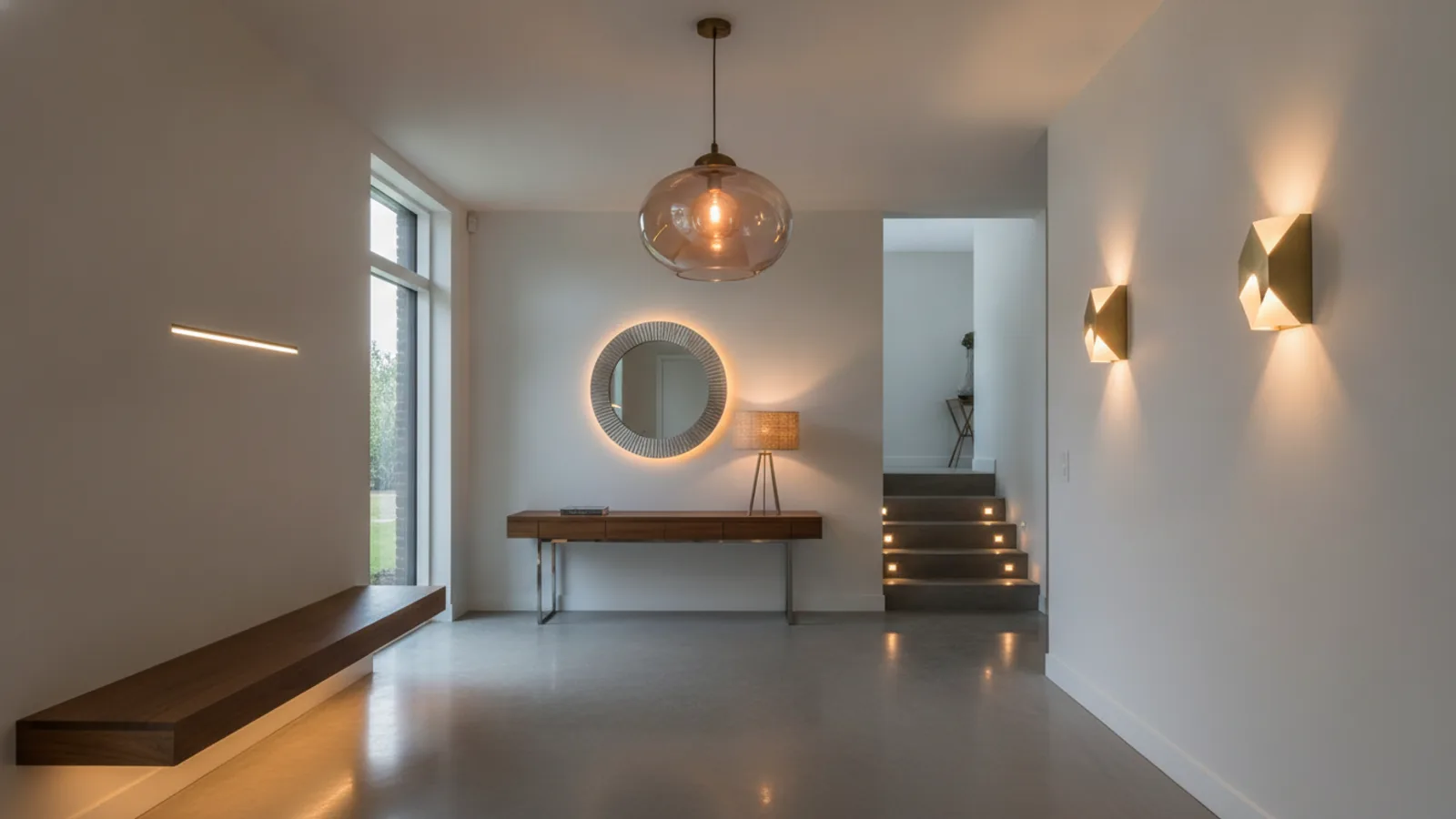
Entryway Lighting Ideas
This guide explains how to approach entryway lighting ideas, including the preparation, practical steps, common mistakes, and final checks that help you finish with confidence.
Before You Start
Step-by-Step Instructions
Quick Reference
Common Problems When You Plan Entryway Lighting Ideas
1. Lighting is Too Dim or Too Bright
Problem: Your entryway either feels like a cave or is blindingly bright, making it uncomfortable for you and your guests.
Fix: This often comes down to choosing bulbs with the wrong lumen output or not layering your lighting effectively. If too dim, increase the total lumen output by using higher-lumen bulbs or adding accent lights like wall sconces or a table lamp. If too bright, switch to lower-lumen bulbs, or better yet, install a dimmer switch. A dimmer gives you complete control over the brightness, allowing you to set the perfect mood for any time of day or night. Always check the bulb's lumen rating before purchasing.
2. Harsh or Unflattering Light Colour
Problem: The light makes colours look strange, or it feels cold and uninviting.
Fix: This is usually a colour temperature issue. If the light feels too cold and sterile, you've likely chosen bulbs with a high Kelvin rating (e.g., 4000K-5000K). Swap these out for warm white bulbs (2700K-3000K) to create a more cosy and welcoming atmosphere. If colours appear dull, ensure your bulbs have a high Colour Rendering Index (CRI) of 80 or above. A high CRI ensures that colours are accurately represented under the artificial light.
3. Poorly Placed Fixtures or Shadows
Problem: The light fixture is too high, too low, or casts awkward shadows, leaving parts of the entryway dark or creating glare.
Fix: Review the placement guidelines discussed earlier (e.g., bottom of pendant at least 2.1 metres from floor). If a fixture is too low, it can obstruct views or pathways. If too high, it might not provide effective illumination. Use a combination of overhead and accent lighting to eliminate shadows. Wall sconces can wash walls with light, reducing harsh shadows from a single overhead source. For recessed lighting, ensure they are angled correctly to highlight features rather than casting unflattering shadows on faces.
4. Incompatible Fixtures and Home Style
Problem: Your new light fixtures look out of place or clash with your home's existing decor.
Fix: This problem stems from a lack of planning in Step 2. Before buying, take photos of your entryway and browse examples of similar styles online. Consider the materials, finishes, and lines of your current furniture and architectural details. If your home is traditional, a modern, minimalist fixture will likely feel jarring. You don't need an exact match, but aim for harmony. Sometimes, changing a bulb's colour temperature can also help bridge the gap if the fixture itself isn't too far off.
Advanced Tips for Entryway Lighting Ideas
1. Implement Smart Lighting Controls
Take your entryway lighting to the next level with smart home technology. Smart bulbs and switches allow you to control your lights remotely via a phone app, voice commands, or even schedule them to turn on and off automatically. You can set up scenes, for example, a "Welcome Home" scene that brightens the entryway as you arrive, or a "Night Mode" that dims the lights. Some systems can even detect motion, turning lights on when someone enters and off when the area is empty, saving energy and providing convenience. Ensure your chosen smart devices are compatible with each other and your home's Wi-Fi network.
2. Highlight Architectural Features or Art
Use lighting to draw attention to specific elements in your entryway. If you have a beautiful archway, a textured wall, a piece of artwork, or a console table display, direct light towards it. Small picture lights can illuminate artwork effectively. Narrow-beam recessed spotlights can create a "wall wash" effect, highlighting textured surfaces. Up-lighting from a floor lamp behind a plant can create dramatic shadows and add depth. This technique adds visual interest and makes your entryway feel more curated and thought-out.
3. Incorporate Seasonal or Event Lighting
Your entryway lighting doesn't have to be static. Consider how you can adapt it for different seasons or special occasions. For example, during winter months or festive periods, you might use warmer bulbs or add small, decorative string lights to a console table or mirror for an extra cosy feel. For parties, you could use smart lighting to change colours or create dynamic light effects. Having outlets available in your entryway for temporary decorative lighting can be very useful for this purpose.
4. Use Reflective Surfaces Wisely
Mirrors are a classic tool for making small spaces feel larger and brighter, but their placement with lights is key. Position mirrors opposite a light source (either natural from a window or artificial from a fixture) to bounce light around the room. However, avoid placing a mirror directly opposite a very bright, unshaded light, as this can create uncomfortable glare. Consider mirrored furniture or glossy finishes on walls or floors for additional light reflection, but balance this with softer elements to prevent the space from feeling too cold or sterile.
Entryway Lighting Ideas FAQ
Q: What is the ideal height for an entryway pendant or chandelier?
A: For entryways with standard ceiling heights (around 2.4-2.7 metres), the bottom of the fixture should generally be at least 2.1 metres (7 feet) from the floor to ensure clearance for most people. In entryways with very high ceilings (3 metres or more), you can go taller, allowing the fixture to hang lower to fill the vertical space and make a grander statement. If placed over an entryway table, the bottom of the fixture can be slightly lower, about 75-90 cm (30-36 inches) above the tabletop.
Q: How many lights do I need for my entryway?
A: It depends on the size and shape of your entryway. A small entryway might only need one overhead flush mount or semi-flush mount light. For larger foyers or long hallways, you'll likely need multiple light sources. This could be a main overhead fixture combined with wall sconces, recessed spotlights, or a table lamp. The goal is to avoid dark corners and ensure even, welcoming illumination throughout the space. Think in terms of layering: general light, accent light, and potentially task light.
Q: Can I use outdoor light fixtures in my entryway?
A: Generally, yes, if the fixture is rated for indoor use and matches your decor. Many outdoor fixtures are designed to be durable and resistant to moisture, which isn't necessary indoors, but they can offer unique styles. The key is to check the manufacturer's specifications to ensure it's safe for interior installation and that the aesthetic fits your home. Some outdoor lanterns or industrial-style lights can look very striking in an entryway.
Q: What's the best type of bulb for energy efficiency?
A: LED (Light Emitting Diode) bulbs are by far the most energy-efficient option available today. They consume significantly less energy than traditional incandescent or halogen bulbs, last much longer, and come in a wide range of brightness levels and colour temperatures. While their initial cost might be slightly higher, the long-term savings on electricity bills and replacement costs make them the most economical and environmentally friendly choice.
Q: How do I clean my entryway light fixtures?
A: Always ensure the power to the fixture is turned off at the consumer unit before cleaning. For most fixtures, a soft, dry microfibre cloth is sufficient for dusting. For more thorough cleaning, you can gently wipe surfaces with a damp cloth lightly moistened with plain water or a very mild, non-abrasive cleaner, then immediately dry. Avoid harsh chemicals or excessive moisture, especially near electrical components. If your fixture has glass shades, remove them carefully if possible and wash them gently by hand, allowing them to dry completely before reattaching.