Rental Kitchen Lighting Ideas
A practical step-by-step guide to rental kitchen lighting ideas, including preparation, instructions, common issues, tips, and next steps.
Rental Kitchen Lighting Ideas
This guide explains how to approach rental kitchen lighting ideas, including the preparation, practical steps, common mistakes, and final checks that help you finish with confidence.
Before You Start
Step-by-Step Instructions
Quick Reference
Common Problems When You Rental Kitchen Lighting Ideas
Even with careful planning, you might encounter a few hurdles when improving your rental kitchen lighting. Knowing how to tackle them can save you time and frustration.
Lights Not Sticking Properly
Problem: Your adhesive LED strips or puck lights keep falling off the cabinets.
Fix: This is almost always due to improper surface preparation. Ensure the surface is spotlessly clean, dry, and free from grease or dust. Use rubbing alcohol and let it air dry completely before applying any adhesive. For stubborn areas or if you're worried about residue, consider applying strong double-sided removable tape (like certain foam tapes or Command strips) to the back of the lights first, then sticking that to the cabinet. Test a small, hidden area first for residue.
Not Bright Enough
Problem: You’ve installed lights, but the kitchen still feels dim or the task lighting isn't sufficient.
Fix: Check the lumen output of your chosen lights. For task lighting, you generally need higher lumens. For under-cabinet lights, ensure they are placed far enough forward to illuminate the whole counter. You might need to add more individual light sources or choose brighter bulbs/strips. Sometimes, combining different types of lighting (e.g., under-cabinet and a floor lamp) is necessary to achieve the desired brightness.
Visible Wires and Cables
Problem: Plug-in lights leave unsightly wires dangling or running across surfaces.
Fix: Invest in adhesive cable clips or cable management sleeves. These can be stuck to the underside of cabinets, along backsplashes, or behind appliances to discreetly guide wires to the nearest socket. For longer runs, consider flat, paintable cable covers that blend into the wall. Always ensure wires are not near water sources or hot surfaces.
Battery Life Is Short
Problem: Battery-operated lights need new batteries too often.
Fix: This can happen with frequently used lights. First, make sure you're using good quality alkaline or rechargeable batteries. Consider upgrading to plug-in options if the area is used constantly, as these are more economical in the long run. Some battery lights have motion sensors; ensure these are set appropriately so the lights aren't on constantly when not needed.
Landlord Concerns or Tenancy Agreement Issues
Problem: You're unsure if a lighting idea breaches your tenancy agreement, or your landlord expresses concerns.
Fix: Always communicate with your landlord first if you're unsure. Show them examples of the non-damaging solutions you’re considering. Emphasise that you are using removable adhesives, battery-operated units, or plug-in lamps that leave no trace. Document your conversations. If they say no to even minor changes, stick to truly portable options like floor lamps or smart bulbs in existing fixtures.
Advanced Tips for Rental Kitchen Lighting Ideas
Once you've mastered the basics, here are some ways to take your rental kitchen lighting to the next level, still keeping landlord-friendliness in mind.
Layer Your Lighting for Best Results
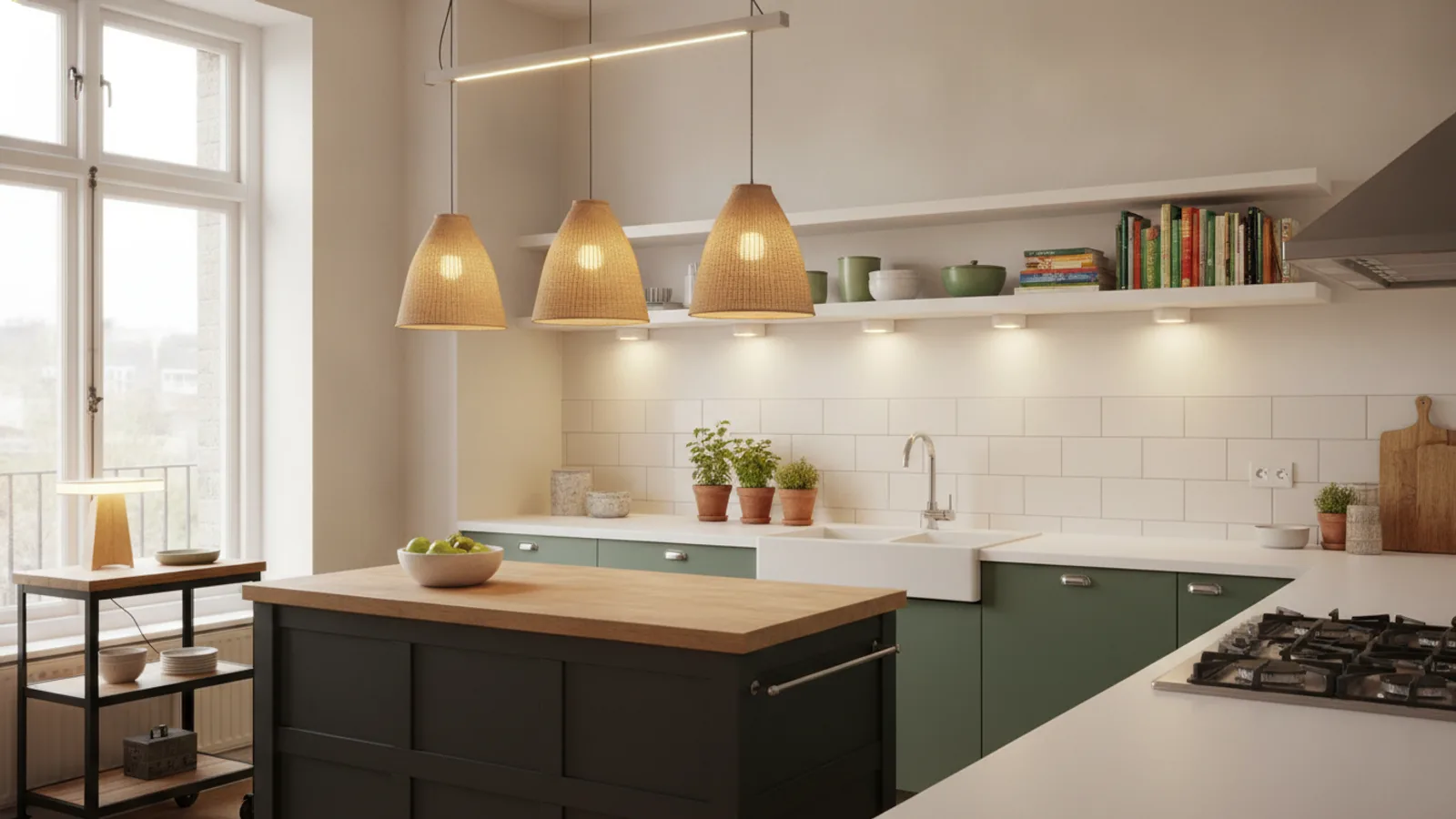
Don't rely on just one type of light. The most effective lighting schemes use a combination of ambient, task, and accent lighting. For example, a floor lamp for ambient light, under-cabinet strips for task lighting, and some small puck lights in a display cabinet for accent. This creates a balanced, functional, and visually appealing kitchen.
Consider Motion-Sensor Lights
For areas like a pantry or inside a cabinet, battery-operated lights with motion sensors are incredibly convenient and energy-efficient. They switch on automatically when you open the door or approach, and turn off when not needed. This saves battery life and provides hands-free illumination, which is ideal in a kitchen.
Use Light Reflectors Strategically
Maximise the impact of your new lighting by enhancing reflections. Clean your kitchen windows regularly to allow more natural light in. Use reflective surfaces like stainless steel appliances, chrome fixtures, or light-coloured tiles to bounce light around the room. Even a large, well-placed mirror (if suitable for the kitchen environment) can make a room feel brighter and larger by reflecting light.
Explore Smart Home Integration (with existing fixtures)
If you're already using smart bulbs in existing fixtures, consider expanding your smart home ecosystem. You can group lights, create complex routines (e.g., "Good Morning" scene turns on lights gently), and control them with voice commands. This adds a layer of convenience and customisation that can transform your kitchen experience without any permanent installations.
DIY Pendant Light Alternatives
If your kitchen lacks central overhead lighting or has a particularly unappealing existing fixture, you might be able to create a temporary pendant light. Look for plug-in pendant light kits that hang from a ceiling hook (use a strong, removable adhesive hook if allowed). These simply plug into a wall socket, and the cord can be discreetly managed. This offers a more decorative central light source without permanent wiring.
Add Decorative Battery-Operated Lighting
Don't underestimate the power of decorative lighting for ambiance. Fairy lights strung along a shelf, battery-operated flameless candles on a windowsill, or even small, decorative lanterns can add warmth and personality to your kitchen. These are purely aesthetic, fully portable, and require no landlord permission, making them perfect for rentals.
Rental Kitchen Lighting Ideas FAQ
Can I drill holes for lighting in a rental kitchen?
Generally, no. Most tenancy agreements strictly prohibit drilling holes into walls or cabinets without explicit written permission from your landlord. Assume you cannot drill unless your contract specifically allows it. Focus on adhesive, magnetic, or freestanding solutions instead.
Are battery-operated lights bright enough for cooking?
It depends on the specific product and its lumen output. For serious task lighting, you'll want lights with a higher lumen rating (e.g., 200-400 lumens per foot for strips). Many modern battery-operated LED lights are surprisingly bright and effective, especially for under-cabinet use. For larger areas or sustained bright light, plug-in options are often more reliable.
How do I hide the cables from plug-in lights?
You can use adhesive-backed cable clips to secure wires along the underside of cabinets, behind appliances, or along the bottom edge of backsplashes. Flat, paintable cable covers can also blend into walls if necessary. The goal is to keep them out of sight and prevent trip hazards.
What if my landlord doesn't approve any changes?
If your landlord is very strict, you’ll need to stick to completely portable and freestanding options. This includes floor lamps, table lamps, clip-on lights, and simply replacing existing bulbs with smart LED bulbs. These options make no physical alteration to the property and are easily removed.
Can I use stick-on lights on painted cabinet surfaces without damage?
Most reputable brands of adhesive-backed LED strips or puck lights claim to be removable without damage. However, always test a small, inconspicuous area first. If you're concerned, apply painter's tape to the surface first, then stick the light's adhesive to the tape. Remove slowly and carefully when moving out.
How can I make my rental kitchen look brighter without adding new lights?
Maximise existing light. Keep windows clean and curtains open during the day. Use light-coloured kitchen accessories, such as white cutting boards or light-coloured dish towels, which reflect light. Regularly clean light fixtures to ensure maximum output from existing bulbs. A well-placed mirror can also help reflect light.
What's the difference between warm white and cool white light?
Light colour is measured in Kelvins (K). Warm white (2700K-3000K) has a yellowish hue, similar to traditional incandescent bulbs, creating a cosy and inviting atmosphere. Cool white (4000K-5000K) has a bluer, crisper light, often preferred for task areas as it promotes alertness and accurate colour rendering for food preparation.
Final Checklist for Rental Kitchen Lighting Ideas
Before you wrap up your lighting project, run through this checklist to ensure everything is perfect and landlord-friendly.
Review Tenancy Agreement: Double-check that no rules have been unintentionally broken.
Test All Lights: Ensure all new lights are working correctly and providing the desired brightness and coverage.
Check for Residue: If you used adhesive, ensure no sticky residue is left behind in any test spots or areas where you briefly placed lights.
Secure All Cables: Make sure any wires are neatly tucked away, secured with clips, and do not pose a trip hazard or come into contact with water.
Clean Up: Remove any tools, packaging, or cleaning supplies used during installation.
Assess Safety: Confirm that no lights are near flammable materials, water sources, or excessively hot surfaces.
Evaluate Visual Impact: Step back and look at your kitchen. Does the lighting feel balanced? Are there still dark spots? Adjust as needed.
Keep Instructions/Receipts: Store user manuals and purchase receipts in case you need to troubleshoot or remove the items later.
Plan for Removal: Mentally or physically rehearse how you will remove the lights when you move out to ensure it can be done without damage.