Small Bedroom Budget Update Ideas
A practical step-by-step guide to small bedroom budget update ideas, including preparation, instructions, common issues, tips, and next steps.
Small Bedroom Budget Update Ideas
This guide explains how to approach small bedroom budget update ideas, including the preparation, practical steps, common mistakes, and final checks that help you finish with confidence.
Before You Start
Step-by-Step Instructions
Quick Reference
Common Problems When You Update a Small Bedroom on a Budget
Even with careful planning, you might run into a few snags when updating your small bedroom on a budget. Knowing what to watch out for can help you overcome them.
Problem: Overspending or Going Over Budget
It's easy to get excited and start buying more than you planned, especially with so many appealing options available. This is the most common pitfall when working on a budget. A small purchase here and there can quickly add up.
- Solution: Stick to your pre-determined budget strictly. Make a list of everything you need and its estimated cost. Only buy essential items. Prioritise what will make the biggest impact for the least cost. Look for second-hand items, sales, or consider DIY solutions before buying new. Keep a running tally of your spending.
Problem: Room Still Feels Cluttered After Decluttering
You’ve removed items, but the room still doesn’t feel spacious. This often happens if the remaining items aren't organised well, or if you still have too much on display.
- Solution: Revisit your decluttering process. Be even more critical about what truly needs to stay in the bedroom. Focus on closed storage solutions (drawers, wardrobes with doors) to hide visual clutter. Use multi-functional furniture, like a storage ottoman. Try the "one in, one out" rule for new purchases.
Problem: Paint Colour Doesn't Look Right
The paint colour you chose looks different on the wall than it did on the swatch, or it makes the room feel smaller than expected.
- Solution: Always test paint colours on a small, inconspicuous patch of your wall and observe it in different lights (daylight, night-time, artificial light) before painting the whole room. For small rooms, generally stick to lighter, cooler tones, as they tend to recede and make a space feel larger. If you've already painted and it's not working, consider adding a large mirror opposite a window to reflect light and break up the wall, or incorporate accent colours with textiles to balance the shade.
Problem: Feeling Overwhelmed by the Project
Updating a room, even a small one, can feel like a big task, leading to procrastination or giving up halfway.
- Solution: Break the project down into smaller, manageable tasks. Don't try to do everything at once. Focus on one step per day or per weekend (e.g., Saturday: declutter; Sunday: deep clean; next weekend: paint). Celebrate small victories to keep your motivation high. Ask a friend or family member to help for a few hours.
Problem: Lack of Natural Light
Your small bedroom doesn't get much natural light, making it feel dark and gloomy even after updates.
- Solution: Maximise any natural light you do have by using sheer curtains or blinds that can be fully opened during the day. Place mirrors strategically to reflect light from windows. Incorporate multiple artificial light sources, including task lighting and ambient lighting, with warm-toned bulbs. Keep wall colours light and reflective. Avoid heavy, dark furniture.
Advanced Tips for Small Bedroom Budget Update Ideas
Once you've mastered the basics, these advanced strategies can help you push your small bedroom update even further, making it look more stylish and feel incredibly spacious without a hefty price tag.
Embrace a Cohesive Colour Palette
Instead of just picking colours you like, choose a small, cohesive colour palette (e.g., 2-3 main colours plus neutrals) and stick to it throughout the room. This creates a harmonious, intentional look that makes a small space feel more sophisticated and less chaotic. Use your main wall colour, an accent colour for textiles or art, and a neutral for larger furniture pieces.
Utilise Optical Illusions with Mirrors and Stripes
Mirrors are a small room's best friend. A large mirror placed strategically can make a room feel double its size by reflecting light and the opposite wall. Consider a floor-length mirror or a gallery wall of smaller mirrors. For walls, subtle vertical stripes (even painted in slightly different shades of the same colour) can make ceilings appear higher. Horizontal stripes can make a narrow room feel wider, but use them sparingly to avoid making a room feel too busy.
Create Zones with Rugs or Lighting
Even in a small room, you can create the illusion of distinct zones (e.g., sleeping area, reading nook, small workspace). Use a small rug to define a sitting area, or strategically place a task lamp to highlight a reading corner. This helps the room feel more organised and functional, rather than just one undifferentiated space.
Curate a Gallery Wall on a Budget
Instead of buying expensive art, create your own gallery wall using personal photos, postcards, free printables, or even fabric swatches. Look for inexpensive frames at charity shops or discount stores and spray paint them all the same colour (black, white, or gold work well) for a cohesive, high-end look. This adds personality without taking up floor space.
Floating Furniture and Wall-Mounted Solutions
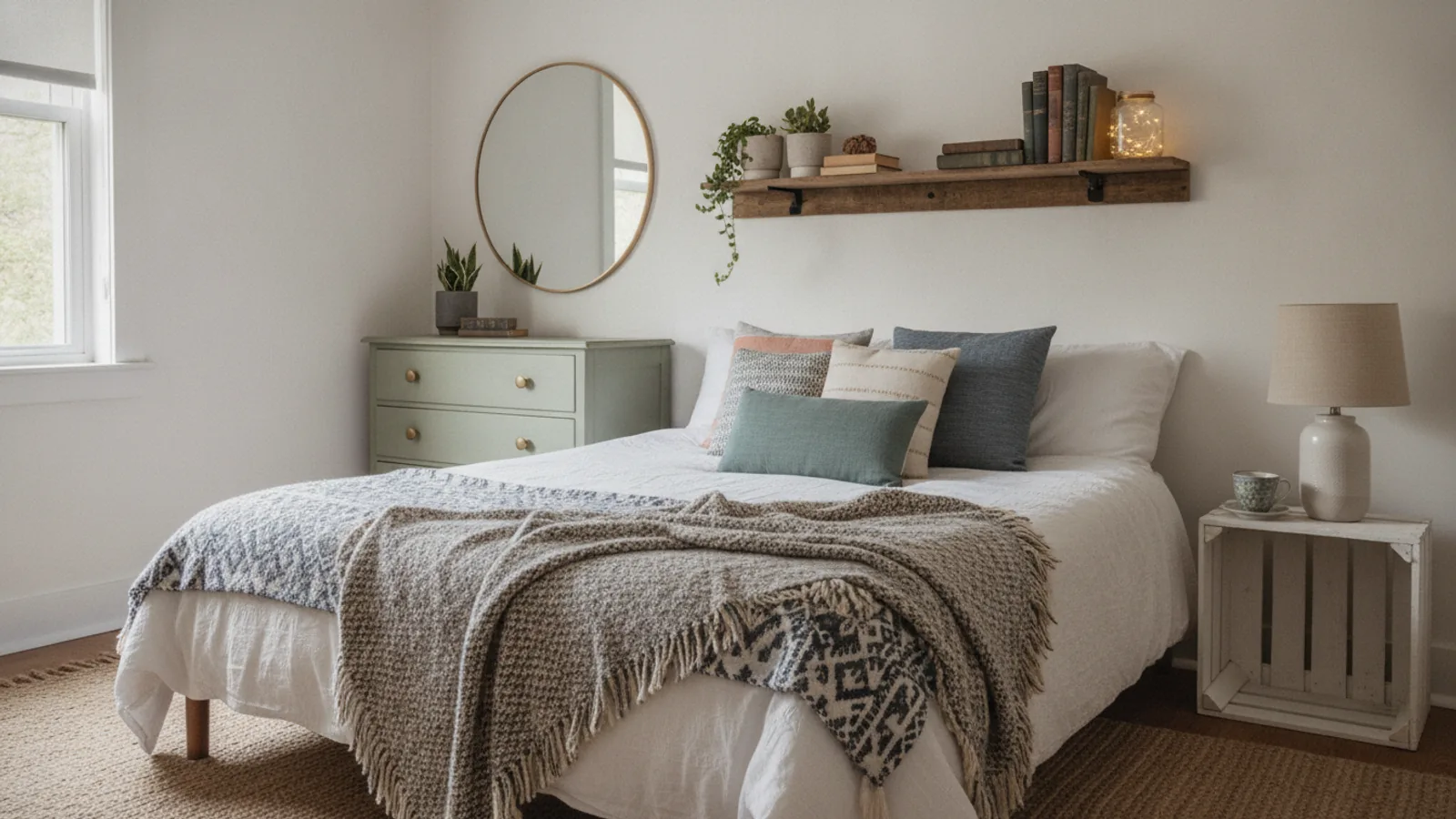
To truly maximise floor space and create an airy feel, opt for floating shelves, wall-mounted bedside tables, or even a wall-mounted desk if you need a workspace. Getting furniture off the floor makes the room feel less cluttered and easier to clean. It also frees up valuable floor area for movement.
Incorporate Multifunctional Furniture
Invest in items that serve more than one purpose. An ottoman that opens for storage, a bed with built-in drawers, or a small drop-leaf desk that can fold away when not in use are excellent choices for small bedrooms. This reduces the number of furniture pieces needed, keeping the room minimalist and functional.
Thoughtful Use of Plants
A few well-placed houseplants can bring life and freshness into a small bedroom. Choose smaller plants that fit on shelves or windowsills, or consider hanging plants to utilise vertical space without taking up surface area. Plants like snake plants or ZZ plants are low-maintenance and can improve air quality.
Small Bedroom Budget Update Ideas FAQ
Q: What's the absolute cheapest way to update a small bedroom?
A: The cheapest way to update is to focus on decluttering, deep cleaning, and rearranging your existing furniture. These steps cost virtually nothing but can dramatically change the feel and functionality of your room. After that, look into swapping out textiles (like an old throw for a new one from a sale) or painting an old piece of furniture you already own.
Q: How can I make my small bedroom look bigger without buying new furniture?
A: Focus on creating optical illusions. Use light, neutral colours on walls to reflect light. Place a large mirror opposite a window or in a strategic spot to reflect light and space. Maximise natural light by keeping windows clear and using sheer curtains. Keep furniture off the walls slightly to create breathing room, and ensure your room is always clean and free of clutter.
Q: Can I update my small bedroom on a budget if I'm renting?
A: Absolutely! Many budget-friendly updates are renter-friendly. Focus on temporary solutions like removable wall decals or temporary wallpaper, upgrading your bedding and textiles, bringing in new lamps or string lights, and using plants. Floating shelves that use adhesive strips (check weight limits!) or freestanding furniture are also good options. Avoid painting or making holes in walls without landlord permission.
Q: How do I choose the best colours for a small bedroom?
A: For small bedrooms, generally stick to lighter, softer colours. Whites, off-whites, pastels (like light blues, greens, or pale greys), and soft greiges (grey-beige) are excellent choices because they reflect light and make the room feel more open and airy. If you want to add a bolder colour, use it as an accent on a single wall, through textiles, or small accessories.
Q: What's the most effective budget item to buy for an instant refresh?
A: A new duvet cover set or a large, soft throw blanket can instantly refresh your bedroom's look and add a pop of colour or texture without breaking the bank. Bedding is often the largest textile in the room, so changing it makes a big impact.
Final Checklist for Small Bedroom Budget Update Ideas
Use this checklist to ensure you've covered all the key steps for a successful and budget-friendly small bedroom update.
- Decluttered Thoroughly: Have you removed all unnecessary items, leaving only what you need and love?
- Deep Cleaned: Is your room spotless, including under furniture and windows?
- Furniture Rearranged: Have you experimented with layouts to maximise space and flow?
- Walls Refreshed: Have you painted, added decals, or created a feature wall? (If applicable)
- Lighting Updated: Do you have multiple, appropriate light sources creating the right mood?
- Smart Storage Added: Are you utilising vertical space and under-bed areas effectively?
- Textiles Refreshed: Are your bedding, curtains, and rugs updated and cohesive?
- Accessories Curated: Have you chosen a few meaningful items and removed clutter?
- Budget Checked: Did you stick to your budget plan throughout the process?
- Personal Touch: Does the room feel like a true reflection of your style and personality?