Small Bedroom Colour Ideas
A practical step-by-step guide to small bedroom colour ideas, including preparation, instructions, common issues, tips, and next steps.
Small Bedroom Colour Ideas
This guide explains how to approach small bedroom colour ideas, including the preparation, practical steps, common mistakes, and final checks that help you finish with confidence.
Before You Start
Step-by-Step Instructions
Quick Reference
Common Problems When You Choose Small Bedroom Colour Ideas
Even with careful planning, you might encounter a few hurdles when selecting colours for a small bedroom. Knowing what to look out for can help you fix issues quickly or avoid them entirely.
Room Still Feels Small After Painting
This often happens if the chosen colour isn't light or cool enough, or if the undertones are wrong for the room's light. A 'light' colour might still have strong warm undertones that absorb light rather than reflect it. It can also occur if too many dark elements (furniture, curtains) are introduced, counteracting the wall colour's effect. Re-evaluate your chosen shade. Does it truly reflect light? Consider going a shade lighter or opting for a cooler tone. Also, look at your decor; could heavy curtains or a dark rug be contributing to the closed-in feeling? Introduce reflective surfaces like mirrors to bounce light around.
Colour Looks Different on the Wall Than on the Sample
This is a very common issue, and it's why testing samples in your actual room is so important. Paint colours are highly sensitive to light. The artificial light in a paint shop, the amount of natural light in your room, and even the direction your room faces can drastically alter a colour's appearance. What looks like a perfect grey in the shop might turn purple or green on your wall. Always test large swatches on multiple walls and observe them at different times of day before committing. If you've already painted and hate it, consider if it's the light or the colour itself. Sometimes changing light bulbs from warm to cool (or vice-versa) can make a difference, but often, it means repainting with a different shade.
Feeling Overwhelmed by Choices
The sheer number of paint colours available can be daunting. If you feel overwhelmed, narrow your focus. Start by deciding on a general mood: Do you want calming, invigorating, or neutral? Then, choose a colour family (e.g., blues, greens, greys). Pick 3-5 shades within that family that you like. Eliminate any that clash with existing elements or feel too dark after your room assessment. Focus on the core principles: light and cool for spaciousness. Don't be afraid to take a break and come back to it with fresh eyes. Sometimes, looking at inspiration photos of small bedrooms can help solidify your preferences.
Accidentally Clashing Colours
This can happen if you introduce too many different colours or if the undertones of your wall colour clash with your furniture or textiles. For instance, a cool-toned grey wall can look jarring with warm, yellow-toned wooden furniture. To avoid this, always bring fabric swatches and samples of existing elements into the room when testing paint. Stick to a limited palette (typically 3-4 colours maximum, including neutrals and accents). If you've already clashed, you may need to adjust either the wall colour or the offending textile/furniture piece. Sometimes, simply adding a neutral throw or cushion can help bridge the gap between clashing tones.
Advanced Tips for Small Bedroom Colour Ideas
Beyond the basics, there are several advanced techniques you can use to further enhance the perception of space and style in a small bedroom.
Use Vertical Stripes or Two-Tone Walls
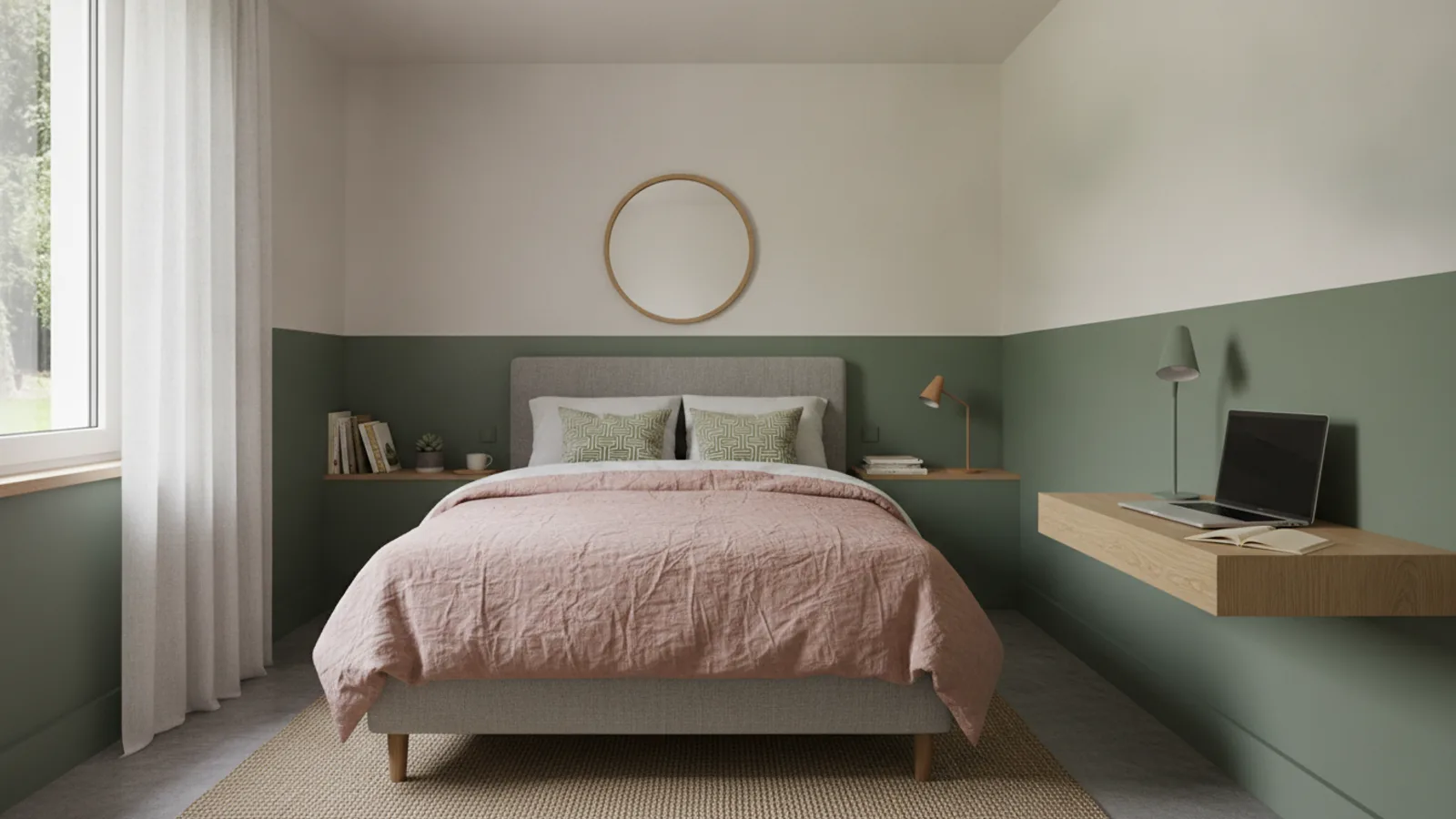
To add height: Vertical stripes can create an optical illusion that makes walls appear taller. You don't need bold stripes; even subtle tone-on-tone stripes using two very similar shades of the same colour can be effective. To add interest: Consider a two-tone wall, where the bottom third or half is painted a slightly darker, more grounding colour, and the top portion (and ceiling) is a much lighter shade. This draws the eye up and can make the ceiling feel higher, while the darker bottom provides a sense of stability.
Leverage Glossy vs. Matte Finishes
The finish of your paint can significantly impact how light is reflected. Matte or flat finishes absorb light, which can make a room feel cosier but potentially smaller. Eggshell or satin finishes have a slight sheen that reflects more light, helping to brighten a small space. For an even greater light-reflecting effect, consider using a very subtle semi-gloss paint on your walls, though this can highlight imperfections. On the ceiling, a flat or matte white is usually preferred to avoid a glare, but on walls, a gentle sheen can work wonders for space and light.
Strategic Placement of Mirrors and Lighting
Mirrors are invaluable in small spaces. A large mirror strategically placed opposite a window can double the amount of natural light in a room and create the illusion of an extra window or doorway, significantly expanding the perceived space. Use mirrors with simple, light frames to avoid adding visual clutter. Beyond mirrors, intelligent lighting can transform a room. Instead of just one overhead light, use multiple light sources: wall sconces, bedside lamps, or floor lamps. Dimmer switches allow you to control the mood. Uplighting (lamps that shine light upwards) can make a ceiling feel higher, enhancing the work done by your chosen wall colours.
Employ Colour Psychology for Mood
While light and cool colours generally expand a space, you can also use colour psychology to fine-tune the mood. Light blues and greens are not only expansive but also calming and serene, perfect for a bedroom. Soft lavenders can add a touch of luxury and tranquility. If you desire warmth in a small, north-facing room, choose a very pale, muted yellow or a soft, warm white to prevent it from feeling clinical. Even in a small space, colour can be a powerful tool for emotional well-being. Consider the feeling you want to evoke most when you enter your bedroom, and let that guide your final colour selection, even within the 'light and cool' guidelines.
Extend Wall Colour onto Furniture
For a truly seamless and expansive look, consider painting a large piece of furniture, like a wardrobe or a chest of drawers, the same colour as your walls. This makes the furniture visually recede into the wall, reducing its perceived bulk and making the room feel larger and less cluttered. This works especially well with built-in or flush furniture. This technique is particularly effective with light, neutral colours and helps to create a sophisticated, tailored look. The furniture essentially becomes part of the architecture, rather than an independent item that breaks up the visual flow of the room.
Small Bedroom Colour Ideas FAQ
What's the absolute best colour for a small bedroom?
There isn't one single "best" colour, as it depends on your specific room and preferences. However, generally, light greys, soft whites, and pale blues or greens are highly recommended. These colours reflect light, recede visually, and create a calm, airy atmosphere, making a small room feel larger and more serene.
Can I use dark colours in a small bedroom?
Yes, but with caution. Dark colours absorb light and typically make a room feel smaller. However, if you want to create a cosy, intimate, or dramatic feel, a dark colour can work on one accent wall (e.g., behind the headboard) or in a very saturated, uniform way on all walls for a "jewel box" effect. Pair it with plenty of light-coloured textiles, mirrors, and strategic lighting to prevent it from feeling too oppressive.
How many colours should I use in a small bedroom?
For a small bedroom, it's best to stick to a relatively simple palette to avoid visual clutter. Aim for 2-3 main colours, including your wall colour, a primary neutral (like white for trim/ceiling), and one accent colour. You can introduce variations of these through different shades and textures in your textiles and decor.
Should the ceiling be lighter or darker than the walls?
For a small bedroom, it is almost always recommended to paint the ceiling lighter than the walls, typically a pure white or a lighter shade of your wall colour. This creates the illusion of height and makes the room feel more expansive and open. A dark ceiling can make the room feel lower and more enclosed.
What about using wallpaper in a small bedroom?
Wallpaper can be used effectively in a small bedroom, but choose wisely. Opt for wallpapers with a small, subtle pattern or a light colour and texture on all walls to add interest without overwhelming. Alternatively, use a wallpaper with a bolder or larger pattern on one accent wall only, to create a focal point without shrinking the room.
Does paint finish matter in a small room?
Yes, paint finish matters. Eggshell or satin finishes are often recommended for small bedrooms as they have a slight sheen that reflects more light than matte finishes, contributing to a brighter, more open feel. Matte finishes absorb light, which can make a room feel cosier, but also potentially smaller.
Final Checklist for Small Bedroom Colour Ideas
Before you consider your small bedroom colour transformation complete, run through this final checklist to ensure you've covered all bases for a beautiful and functional space.
By following these steps and considering the nuances of colour, light, and space, you'll be well on your way to creating a small bedroom that feels much larger, brighter, and more inviting.