Small Bedroom Furniture Guide
A practical step-by-step guide to small bedroom furniture guide, including preparation, instructions, common issues, tips, and next steps.
Small Bedroom Furniture Guide
This guide explains how to approach small bedroom furniture guide, including the preparation, practical steps, common mistakes, and final checks that help you finish with confidence.
Before You Start
Step-by-Step Instructions
Quick Reference
Common Problems When You Plan Small Bedroom Furniture
Even with careful planning, you might encounter a few common issues when furnishing a small bedroom. Knowing what these are and how to fix them can save you time and frustration.
Over-filling the Room with Too Many Pieces
Problem: It's tempting to try and fit everything you think you need into your bedroom, leading to a cluttered, uncomfortable space. Even with small furniture, too many items will make the room feel much smaller and harder to navigate.
Fix: Revisit your prioritisation list from Step 2. Be honest about what you truly need versus what you'd like to have. If a piece doesn't fit without blocking a pathway or making the room feel tight, it's likely not the right choice for your space. Focus on quality over quantity and embrace minimalism. Consider whether an item could live in another room or if you can live without it entirely.
Blocking Natural Light or Pathways
Problem: Placing furniture incorrectly can block windows, reducing natural light and making the room feel dim and enclosed. Similarly, obstructing doorways or creating narrow passages makes the room feel cramped and difficult to move through.
Fix: Always consider your room's natural light sources and main traffic flow when planning. Try to keep windows clear of tall furniture. If you must place furniture near a window, opt for low-profile pieces. Ensure there's at least 60-70cm (24-28 inches) of clear space for pathways, especially around the bed and in front of wardrobes or drawers. Use your floor plan sketch to test different layouts before committing to moving heavy items.
Choosing Bulky or Visually Heavy Furniture
Problem: Some furniture, even if its dimensions fit, can look too heavy or solid for a small room, making the space feel visually cluttered and dense. Solid, dark wood pieces or furniture with heavy bases can have this effect.
Fix: Opt for furniture with legs rather than solid bases, as this allows light to pass underneath and creates a sense of openness. Choose lighter colours, natural wood tones, or even transparent materials like acrylic for smaller items. Furniture with sleek, modern designs generally appears less visually heavy than ornate or traditional styles. Open shelving can also feel lighter than closed cabinets.
Not Utilising Vertical Space Effectively
Problem: Many people forget to look up and only consider floor-level storage, leaving valuable wall space unused. This results in clutter on surfaces and a missed opportunity to store items without taking up precious floor area.
Fix: Actively seek out opportunities for vertical storage. Install shelves above your bed, desk, or doorframes. Choose wardrobes that extend to the ceiling. Use wall-mounted bedside tables or sconce lights. Even a tall, narrow plant stand can add vertical interest without occupying much floor space. Think "up" whenever you consider adding storage or decor.
Ignoring the Importance of Scale
Problem: Bringing furniture into a small room that is out of proportion can make the room feel awkward and disproportionate. A king-sized bed in a tiny room, for example, will overwhelm the space.
Fix: Always consider the scale of your furniture in relation to the overall room size. A double bed might be a better choice than a king-size, even if it's a tight squeeze, to allow for essential walking space. Choose nightstands that are narrower and shallower. If you need a chest of drawers, opt for a tall, slim one rather than a wide, short one. Every piece should complement the room's dimensions, not fight against them.
Advanced Tips for Small Bedroom Furniture Guide
Once you've mastered the basics, these advanced tips can help you take your small bedroom design to the next level, creating an even more efficient and stylish space.
Consider Custom Built-ins
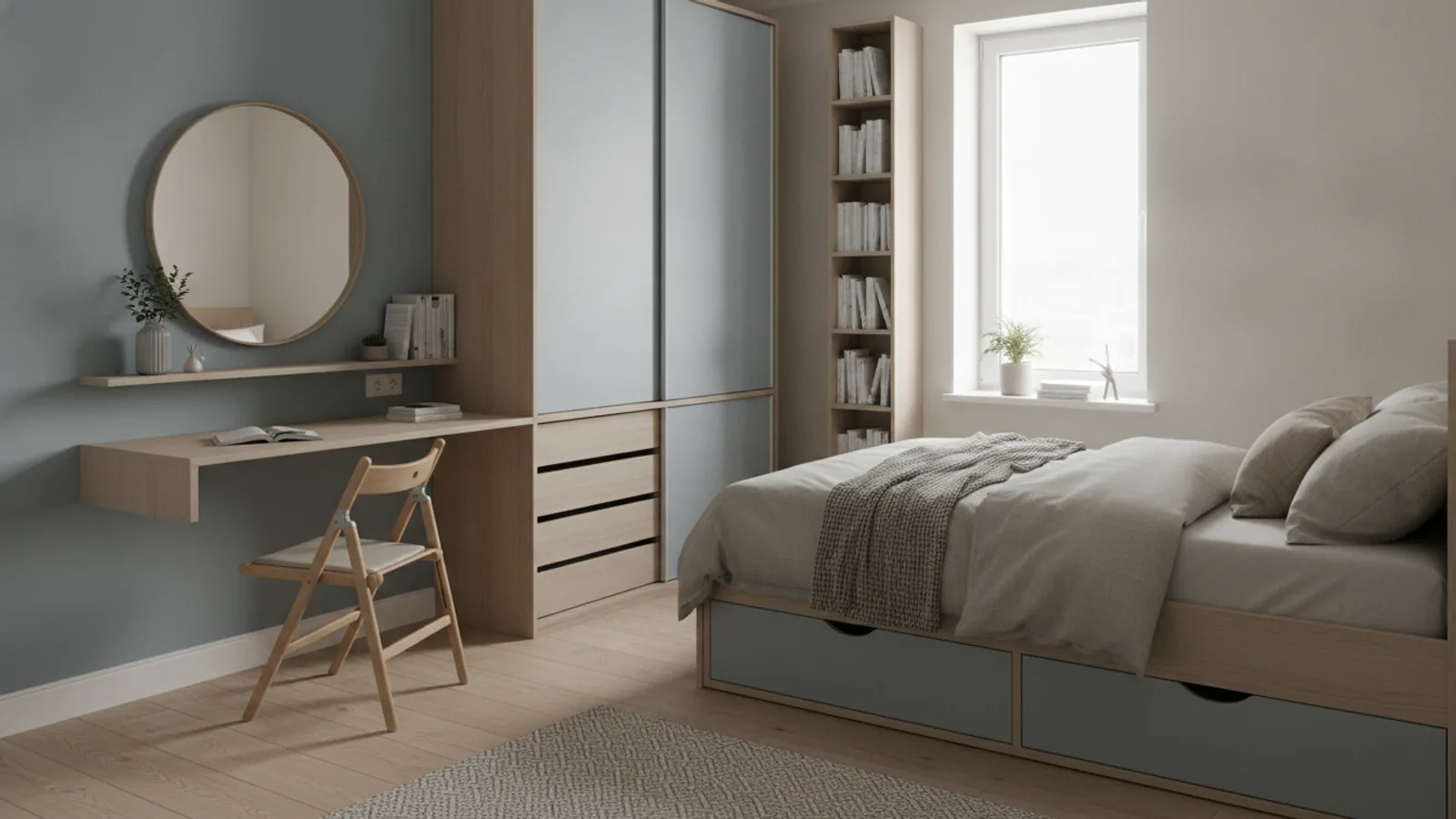
If your budget allows, custom built-in furniture is the ultimate solution for small spaces. Built-ins can be designed to perfectly fit awkward nooks, around windows, or over beds, making the most of every centimetre. This could include a built-in wardrobe that integrates shelving and a desk, or a bed frame with integrated storage and bedside tables. While a larger initial investment, built-ins offer seamless storage and a bespoke look that feels intentionally designed for the room, avoiding wasted space that off-the-shelf furniture often leaves.
Incorporate Sliding Doors or Pocket Doors
Traditional hinged doors (for wardrobes, en-suites, or even the bedroom entrance) require a significant swing radius, eating into usable floor space. If possible, consider replacing these with sliding doors or pocket doors. Sliding doors run along a track, while pocket doors disappear into the wall, completely freeing up the space that a swinging door would occupy. This small change can make a huge difference in furniture placement and overall room flow.
Use Furniture on Wheels
For ultimate flexibility, incorporate some furniture pieces with lockable castors (wheels). A small desk, a storage ottoman, or even a narrow shelving unit on wheels can be easily moved around as needed. This allows you to reconfigure your space for different activities – pull out a desk to work, then tuck it away when you need floor space for exercise, for example. Just ensure the wheels lock securely to prevent accidental movement.
Leverage Smart Home Technology for Control
While not strictly furniture, integrating smart home technology can declutter your small bedroom by reducing the need for physical switches and controls. Use smart bulbs that can be controlled via an app or voice command, eliminating the need for accessible light switches on crowded walls. Smart blinds or curtains can open and close automatically, again reducing physical interactions and cords. This contributes to a cleaner, more minimalist aesthetic.
Create Visual Tricks with Transparency and Reflection
Beyond standard mirrors, look for furniture that uses transparent or reflective surfaces. A glass or acrylic bedside table will virtually disappear, taking up no visual space. Furniture with glossy finishes can reflect light, similar to a mirror, making the room feel brighter and larger. Even carefully placed decorative items with metallic or reflective surfaces can contribute to this effect, adding sparkle and depth without adding visual weight.
Maximise Under-Bed and Headboard Storage
While storage beds are a good start, think about how to further optimise the space around and above your bed. If your bed frame allows, use storage boxes on wheels that can be easily slid underneath. For headboards, consider a custom-built unit that incorporates shelves, cubbies, or even pull-out drawers directly into the headboard itself. This turns a functional piece into a major storage hub, keeping essentials close at hand without cluttering a bedside table.
Small Bedroom Furniture Guide FAQ
Final Checklist for Small Bedroom Furniture Guide
By following this guide, you’re well-equipped to transform your small bedroom into a functional, spacious, and inviting retreat. Remember that a well-designed small space is about smart choices, not sacrificing comfort or style. Take your time, measure twice, and enjoy the process of creating your perfect bedroom oasis.
FAQ
What should I check before I start?
Check the goal, the key prerequisite, and any current instructions that could change the safest next step for small bedroom furniture guide.
How can I tell whether the result is working?
Use the practical checks in the guide, pause if a required step is unclear, and verify the finished result against the intended outcome.