Small Bedroom Lighting Ideas
A practical step-by-step guide to small bedroom lighting ideas, including preparation, instructions, common issues, tips, and next steps.
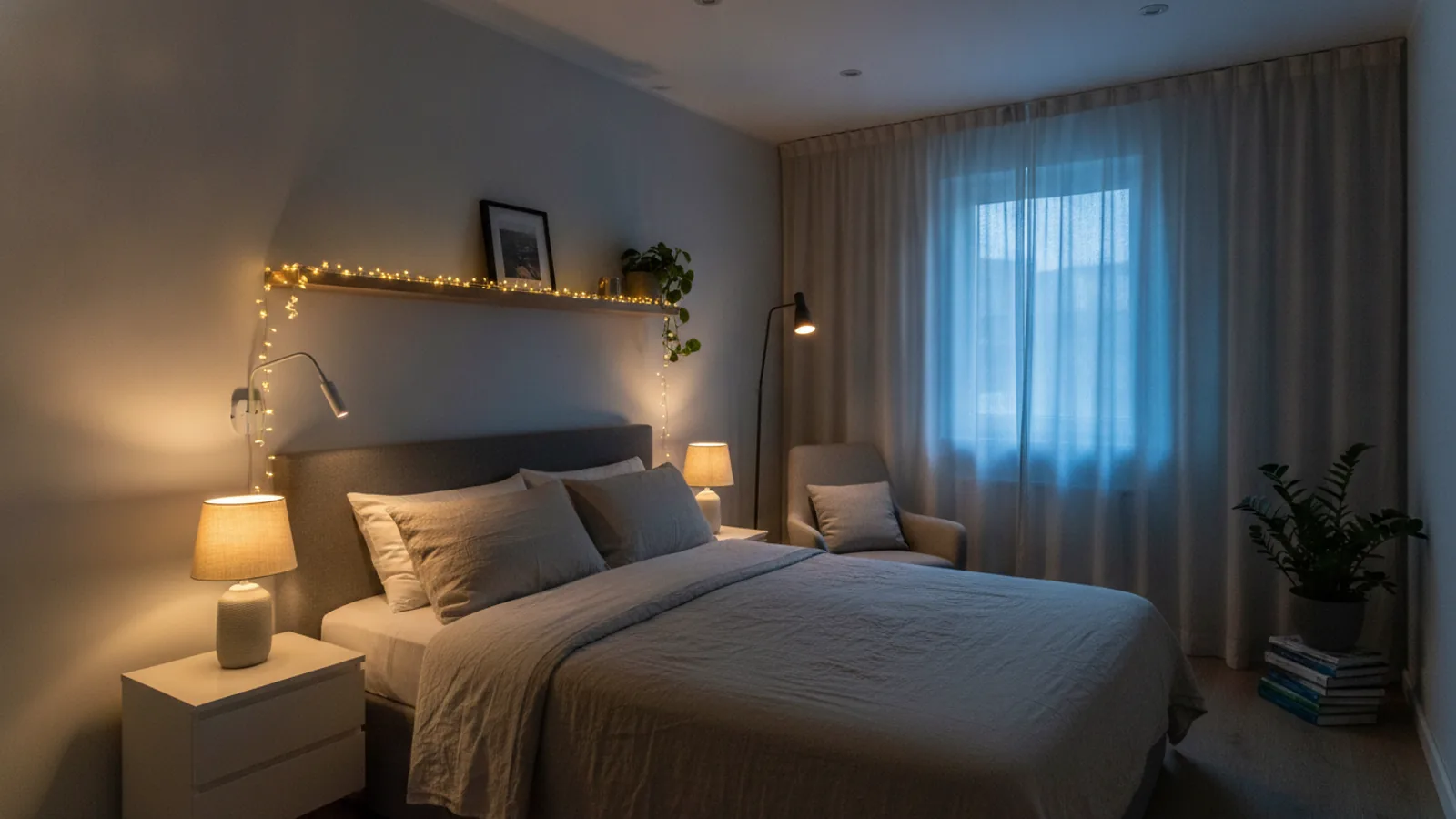
Small Bedroom Lighting Ideas
This guide explains how to approach small bedroom lighting ideas, including the preparation, practical steps, common mistakes, and final checks that help you finish with confidence.
Before You Start
Step-by-Step Instructions
Quick Reference
Common Problems When You Plan Small Bedroom Lighting Ideas
Even with careful planning, you might encounter a few hurdles when lighting a small bedroom. Here are some common issues and their practical solutions.
1. Too Much Direct Glare
Direct, harsh light can be uncomfortable and make a small room feel less inviting. This often happens with bare bulbs or downward-facing spotlights that are too bright.
- Fix: Use diffusers or frosted bulbs. Choose fixtures with shades or covers that soften the light. Direct spotlights towards walls or ceilings (uplighting/wall washing) rather than directly into the room. Dimmers can also significantly reduce glare.
2. Not Enough Light Overall
Sometimes, focusing on space-saving can lead to under-lighting the room. A single ceiling light often isn't enough to brighten all corners of a small bedroom, leaving dark spots.
- Fix: Ensure you have all three layers of lighting (ambient, task, accent). If your main ambient light isn't enough, consider adding a couple of additional recessed lights or discreet wall sconces. Check the lumens of your bulbs – you might need brighter ones, especially for ambient lighting.
3. Room Still Feels Small and Cramped
If your lighting strategy isn't making the room feel more expansive, it might be due to incorrect placement or light types that don't uplift the space.
- Fix: Re-evaluate your use of vertical lighting. Are you using uplighters to draw the eye up? Can you add lighting along the top of a wardrobe or shelf to create height? Incorporating mirrors can also help, as they reflect light and make a room feel larger.
4. Visible Wires and Clutter
In a small room, visible wires can quickly make the space feel untidy and cluttered, defeating the purpose of space-saving lighting.
- Fix: For hardwired fixtures, ensure all wiring is properly concealed within walls or conduit. For plug-in lights, use cable management clips or trunking to hide wires along skirting boards or behind furniture. Opt for battery-operated lights where practical to eliminate wires entirely.
5. Lighting Isn't Flexible Enough
A single lighting setting for all activities can be frustrating. You might have bright light for getting ready but no soft option for relaxing.
- Fix: Install dimmer switches on your main lights. Consider smart bulbs that allow colour and brightness changes. Having different circuits for ambient, task, and accent lighting allows you to control each layer independently, offering maximum flexibility.
Advanced Tips for Small Bedroom Lighting Ideas
Once you've mastered the basics, these advanced tips can take your small bedroom lighting to the next level, adding sophistication and enhanced functionality.
1. Integrate Smart Home Lighting
Move beyond simple dimmers to a full smart lighting system. Modern smart bulbs and switches allow you to control individual lights or groups from your phone, voice assistant, or pre-set schedules. You can change colours, set scenes (e.g., "Good Morning" or "Relax"), and even simulate daylight cycles to improve sleep patterns.
This level of control offers incredible flexibility and can make a small space feel much more adaptable to different needs throughout the day and night. Plus, no more fumbling for switches in the dark.
2. Use Mirrors to Amplify Light
Mirrors are a well-known trick for making small rooms feel larger, but they are also powerful tools for amplifying light. Position a large mirror opposite a window to maximise natural light during the day. In the evening, strategically place mirrors to reflect artificial light sources, effectively doubling their impact and spreading light into darker corners.
A well-placed mirror with a subtle light source nearby can create a beautiful glow and make the room appear brighter and more spacious.
3. Explore Cove and Pelmet Lighting
Cove lighting involves concealing LED strips or linear lights within a ceiling recess or along the top of furniture like wardrobes. Pelmet lighting does the same, but often above windows or curtains. These techniques provide indirect, diffused light that washes the ceiling or walls, creating a soft, ambient glow without any visible fixtures.
This is an excellent way to add architectural interest and a sense of luxury, making the room feel taller and more open, perfect for small bedrooms where every inch counts.
4. Consider Lighting Inside Wardrobes or Drawers
Small bedrooms often mean smaller wardrobes. Adding motion-activated LED strips inside wardrobes or drawers can be incredibly practical. Not only does it make finding clothes easier, but it also adds a subtle layer of light that contributes to the room's overall brightness without taking up any external space.
These are usually battery-operated and easy to install, providing a sophisticated touch and solving a common problem in compact spaces.
5. Layer Textures with Light
Beyond simply illuminating the room, think about how light interacts with textures. Use accent lighting to highlight a textured wallpaper, a woven headboard, or a specific piece of art. The play of light and shadow on different surfaces adds depth and visual interest, making a small room feel less flat and more engaging.
This subtle approach creates a richer environment and distracts from the room's actual size by focusing on intricate details and inviting visuals.
Small Bedroom Lighting Ideas FAQ
Q1: What is the best colour temperature for a small bedroom?
A: For a small bedroom, a warm white colour temperature (around 2700K to 3000K) is generally best. This creates a cosy, inviting, and relaxing atmosphere, which is ideal for a space where you sleep and unwind. Cooler temperatures can feel too harsh or clinical.
Q2: Can I use a central ceiling light in a small bedroom?
A: Yes, you can, but choose wisely. Instead of a large, low-hanging pendant, opt for flush-mount fixtures, semi-flush fixtures, or recessed spotlights. These types of ceiling lights provide general ambient light without visually lowering the ceiling or taking up precious vertical space.
Q3: How do I avoid glare from my bedroom lights?
A: To avoid glare, choose lights with diffusers or frosted shades. Direct light upwards or towards walls (uplighting/wall washing) rather than directly into your line of sight. Using multiple, lower-wattage bulbs instead of one very bright bulb, and installing dimmer switches, can also significantly reduce harsh glare.
Q4: What about natural light in a small bedroom?
A: Maximising natural light is crucial for making a small bedroom feel larger and brighter. Keep window treatments light and airy, opting for sheer curtains or blinds that can be fully pulled back. Avoid blocking windows with heavy furniture. Positioning mirrors opposite windows can also help bounce natural light deeper into the room.
Q5: Are LED strip lights good for small bedrooms?
A: Absolutely! LED strip lights are excellent for small bedrooms. They are thin, discreet, and can be hidden behind headboards, along shelves, or under furniture to provide ambient or accent lighting without taking up any physical space. They also offer a wide range of colours and dimming options for mood creation.
Final Checklist for Small Bedroom Lighting Ideas
Use this checklist to ensure your small bedroom lighting ideas are implemented effectively and safely.
Mains electricity turned off: Confirmed at the fuse box before any electrical work?
Lighting layers considered: Is there ambient, task, and accent lighting planned?
Space-saving fixtures chosen: Are lights wall-mounted, recessed, or slim-profile where possible?
Strategic placement: Are lights positioned to maximise space and enhance height?
Task lighting sufficient: Are reading and other activity areas well-lit without clutter?
Accent lighting for mood: Are there elements to create atmosphere and highlight features?
Dimmers or smart controls: Is there flexibility to adjust brightness and mood?
Appropriate bulbs selected: Are bulbs warm white (2700K-3000K) and suitable brightness (lumens)?
Glare avoided: Are diffusers or indirect lighting used to prevent harsh light?
Wiring concealed: Are all cables neatly managed and out of sight?
Overall effect reviewed: Does the room feel bright, inviting, and larger?
Safety check: Have all installations been done correctly and safely, especially for hardwired fixtures?