Small Bedroom Organisation Ideas
A practical step-by-step guide to small bedroom organisation ideas, including preparation, instructions, common issues, tips, and next steps.
Small Bedroom Organisation Ideas
This guide explains how to approach small bedroom organisation ideas, including the preparation, practical steps, common mistakes, and final checks that help you finish with confidence.
Before You Start
Step-by-Step Instructions
Quick Reference
Common Problems When You Organise a Small Bedroom
Even with the best intentions, you might encounter a few hurdles when tackling small bedroom organisation. Knowing these common issues and their practical fixes can help you stay on track and avoid frustration.
Problem: You still have too much stuff, despite decluttering.
Fix: This often happens when we're not quite honest with ourselves during the initial declutter. Revisit your "keep" pile with an even more critical eye. Ask yourself: "Do I truly love this?", "Is it essential?", "Does it add value to my daily life in this small space?" Consider creating a "maybe" box for items you're truly unsure about. Store this box out of sight for 3-6 months. If you haven't needed or thought about any of its contents in that time, it's a clear sign you can let them go.
Problem: The storage solutions you bought don't fit or aren't effective.
Fix: This usually stems from not measuring accurately before purchasing. Always measure precisely not just the length and width of available space, but also the depth and height. Look for customisable or modular storage units that can be adapted to awkward spaces. Sometimes, simple DIY solutions using basic shelves and baskets can be more effective and tailored than expensive off-the-shelf items. Don't be afraid to return items that don't serve their purpose well.
Problem: Your organisation system doesn't last; clutter builds up again quickly.
Fix: The system might be too complicated, too restrictive, or not aligned with your actual habits. Simplify it. If putting something away feels like a chore, rethink its designated spot. Make it as easy as possible to put items back where they belong. For instance, if you always leave your keys on your nightstand, a small tray there might be a better solution than a hook on the wall across the room. Consistency in maintenance, even just 5 minutes a day, is also key.
Problem: Even after organising, the room still feels cramped or oppressive.
Fix: Beyond physical organisation, visual impact plays a huge role in small spaces. Ensure good lighting; natural light is best, but well-placed lamps can brighten dark corners. Opt for lighter colour schemes on walls and bedding. Strategically placed mirrors can reflect light and create the illusion of more space. Minimise heavy, bulky curtains, opting for blinds or sheer panels instead. Focus on clean lines and avoid overly ornate furniture that can visually weigh down the room.
Advanced Tips for Small Bedroom Organisation Ideas
Once you've mastered the basics, these advanced strategies can help you push your small bedroom organisation further, making your space even more functional and aesthetically pleasing.
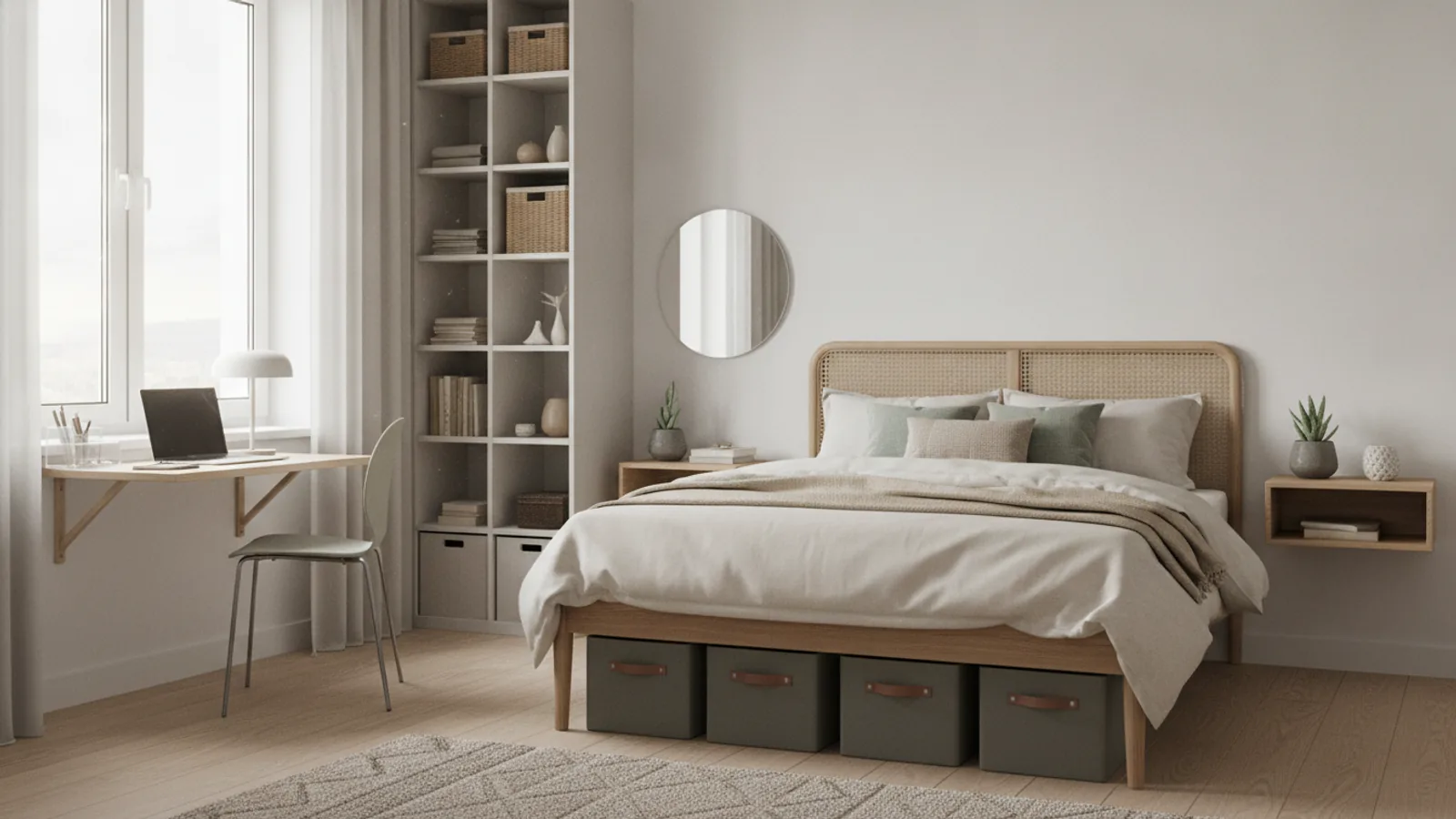
- Embrace Multi-functional Furniture: This is a cornerstone of small space living. Instead of separate pieces, look for furniture that serves multiple purposes. Examples include a bed with built-in drawers or shelves, an ottoman that doubles as storage and seating, or a desk that folds away into a wall unit. Every item should earn its place by offering more than one use.
- Strategic Mirror Placement: A large mirror isn't just for checking your outfit; it's a powerful tool for making a small room feel bigger and brighter. Place a mirror opposite a window to reflect natural light and the view outside, effectively extending the room's perceived dimensions. A full-length mirror leaning against a wall also adds depth without taking up visual space.
- Implement "Zoning" with Purpose: While we touched on zones earlier, advanced zoning involves defining specific areas for specific activities using subtle cues. A small rug can delineate a reading nook, even if it's just a chair and a tiny side table. A carefully placed floor lamp can create a "work zone" over a desk. These visual boundaries help to make a multi-functional room feel less chaotic.
- Consider Digital Decluttering: Don't underestimate the impact of digital clutter on your mental space. Organising your computer files, photos, and email inbox can reduce a significant amount of mental noise, which contributes to a more serene and organised feeling in your physical surroundings. A clear digital life can support a clear physical space.
- Seasonal Item Rotation: If your storage is truly limited, consider a rigorous seasonal rotation system. Store off-season clothing, bedding, or decorative items in a dedicated spot outside your main bedroom (if possible, like an airing cupboard or shared storage). Only keep items relevant to the current season readily accessible. This keeps your primary storage from overflowing and ensures you're always using what's available.
- Wall-Mounted Everything: Beyond shelves, think about wall-mounted bedside tables, desks, or even television mounts. Getting items off the floor frees up visual and actual space, making cleaning easier and the room feel less cluttered.
Small Bedroom Organisation Ideas FAQ
Here are answers to some frequently asked questions about organising a compact bedroom space.
Q: How often should I declutter my small bedroom to keep it organised?
A: A major, thorough declutter should ideally happen at least once a year. However, a lighter "refresh" or re-evaluation of items every 3-6 months is highly beneficial. More importantly, aim for a quick 10-15 minute tidy-up daily or weekly to put things back in their designated spots. This consistent maintenance is what truly prevents clutter from building up again.
Q: What is the single most important principle for organising a small room?
A: The most crucial principle is ruthless decluttering. You cannot effectively organise clutter; you simply move it from one spot to another. Before you buy any storage solutions, commit to removing anything you don't truly need, use, or love. Start with less, and then find smart homes for the remaining items.
Q: Can I still have decor and personal touches in a small, organised bedroom?
A: Absolutely! Organisation doesn't mean sterility. Choose decor pieces wisely: opt for fewer, larger statement pieces rather than many small trinkets which can create visual clutter. Wall art is excellent as it doesn't take up surface space. Mirrors, as mentioned, are both decorative and functional. Select items that have personal meaning and genuinely enhance the space, rather than just filling it.
Q: Is it better to buy storage containers first or declutter first?
A: Always declutter first. This is a critical mistake many people make. You need to know exactly what items you're keeping and storing before you can determine the type, size, and quantity of storage you actually need. Buying storage prematurely often leads to buying the wrong kind, buying too much, or accumulating empty containers that become clutter themselves.
Q: How do I deal with sentimental items in a small bedroom?
A: Sentimental items are tough. Try to digitise where possible (e.g., photos). For physical items, select a small, designated "memory box" or container. Only keep the most cherished pieces that genuinely evoke strong memories. Consider displaying a few key items and rotating others in and out of the memory box periodically to enjoy them without overwhelming your space.
Final Checklist for Small Bedroom Organisation Ideas
Use this checklist to ensure you've covered all the key steps in organising your small bedroom for maximum efficiency and calm.
- All non-essential items have been thoroughly decluttered and removed from the bedroom.
- Every remaining item has a designated, easy-to-access home within the room.
- Vertical space has been maximised using shelves, tall units, or wall-mounted organisers.
- Under-bed space is being effectively utilised with appropriate storage containers.
- Door-back or other wall areas are used for hanging or shallow storage.
- Wardrobe and drawer interiors are optimised with slim hangers, dividers, or vertical folding.
- Surfaces (desk, nightstand) are kept as clear as possible, with only essentials displayed.
- A regular maintenance routine (e.g., 10-15 minutes weekly) is in place to prevent future clutter.
- The room feels calmer, more functional, and visually appealing.
- You're enjoying your newly organised and serene small bedroom!